|
 |
 |
 |
 |
 |
 |
 |
 |

 |
Navy Approves Raytheon's Zumwalt Total Ship Computing Environment Infrastructure
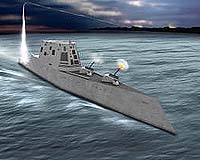
Tewksbury MA (SPX) Oct 31, 2007 Raytheon recently achieved a significant Zumwalt-class destroyer program milestone with the successful preliminary design review of the "Release 5" Total Ship Computing Environment Infrastructure (TSCEI). TSCEI is a key element of the ship's overall Total Ship Computing Environment, which comprises six releases of software and more than 5 million lines of code. Each incremental TSCEI release adds improved mission capability and robustness to Zumwalt's computing infrastructure, upon which all applications will execute and interoperate. TSCEI combines with Zumwalt's mission applications to provide an open architecture mission system designed to meet all DDG 1000 surface combatant requirements and is scalable to meet evolving operational needs. This architecture integrates all warfighting and peacetime operations into a single, common computing environment that encompasses combat systems and C4ISR (command, control, communications and computers, intelligence, surveillance and reconnaissance). "Throughout the development of the TSCEI, the Navy has expressed great confidence in our software team's ability to deliver a best-in-class open- architecture computing solution," said Raytheon's Zumwalt System Software Development Director Bob Martin. "Moving forward with this milestone release adds another chapter to this exceptional customer satisfaction story." The Zumwalt TSCEI provides a shipboard enterprise network allowing seamless integration of all on-board systems. It also gives the Navy increased ability to use standardized software and commercial-off-the-shelf hardware on a fleet-wide basis. TSCEI provides computer support for Zumwalt ship control, maintenance, logistics, training and other deployment functions. This level of integration and automation is unprecedented and is a primary driver for the 60 percent reduction in manning being implemented on the Zumwalt-class destroyer. TSCEI integrates advanced security features for authentication, access control, network encryption and high-assurance guards to enable trusted operations and data sharing across multiple information security domains. Under the Navy's DDG 1000 Detail Design and Integration contract awarded in 2005, Raytheon IDS serves as the prime mission systems equipment integrator for all electronic and combat systems for the Zumwalt-class destroyer program. Working with the Navy and a team of industry leaders, IDS is leading the effort to transform the Navy's ship requirements to reality. For more information, visit here. Community Email This Article Comment On This Article Related Links Naval Warfare in the 21st Century
 Military Matters: A 'little ship' Navy
 Washington (UPI) Oct 29, 2007
 In an article in the November issue of Atlantic Monthly, "America's Elegant Decline," Robert Kaplan reminds us of a geostrategic reality we can easily forget in the face of Fourth Generation wars in Iraq and Afghanistan: The United States is inescapably a maritime power. (William S. Lind, expressing his own personal opinion, is director for the Center for Cultural Conservatism for the Free Congress Foundation.) |
|
|

| The content herein, unless otherwise known to be public domain, are Copyright 1995-2007 - SpaceDaily.AFP and UPI Wire Stories are copyright Agence France-Presse and United Press International. ESA Portal Reports are copyright European Space Agency. All NASA sourced material is public domain. Additional copyrights may apply in whole or part to other bona fide parties. Advertising does not imply endorsement,agreement or approval of any opinions, statements or information provided by SpaceDaily on any Web page published or hosted by SpaceDaily. Privacy Statement |