|
 |
 |
 |
 |
 |
 |
 |
 |

 |
Nature Mimics Industry
Hanover NH (SPX) Jul 22, 2004 Human made chemical compounds called organohalogens get loads of attention as they are best known for their often harmful effect on the environment - substances like the CFCs (the ozone-damaging chemicals), dioxin (found in the herbicide Agent Orange), PCBs (industrial fluids) and several pesticides. Their naturally occurring cousins, however, don't get the recognition they deserve, according to Dartmouth Chemistry Professor Gordon Gribble. Gribble has taken it upon himself to help scientists and the public understand that there are more than 4,000 naturally occurring organohalogens, and many are similar or even identical to their synthetic counterparts. "Humans have been manufacturing organohalogen compounds like bleach, pesticides, pharmaceuticals, and other industrial chemicals for decades," says Gribble, who wrote about these compounds in the July-August issue of American Scientist, the magazine of the scientific research society Sigma Xi. "I think researchers forget to look to nature for remarkable examples of similar and often identical halogenated organic chemicals. These amazing compounds are a vital part of life, and they serve natural purposes as hormones, pheromones, repellents and natural pesticides." Organohalogen compounds all contain one of the halogen elements chlorine, bromine, iodine or fluorine. Gribble keeps a record of newly discovered natural organohalogens. Because of improved underwater exploration and research capabilities, most new ones, he says, are being found in the ocean's marine life. The cone snail, for instance, which lives in tropical marine environments, produces a bromine-based venom that is extremely toxic to people, but allows the snail to effectively immobilize and kill its prey. Gribble explains that the cone snail's particular organobromine peptide is in human clinical trials for the treatment of pain. "Sponges and tunicates are great examples of using chemicals for survival," says Gribble. "Being anchored to the reef, they can't swim and they don't have protective shells or teeth, so they biosynthesize chemicals for defense, many of which contain halogen due to the ocean's high salt content." Sponges and other marine organisms produce a variety of bromine-based organohalogens, which repel predatory fish and prevent bacterial overgrowth, he says. These compounds are being studied to someday prevent barnacle growth on the underside of ships. Several other marine organohalogens have promising medicinal value, including treatment for cancer, bacterial infection and HIV. Plants also make organohalogens. Broccoli and other related plants like cabbage, turnips and rapeseed (used to make canola oil) create a bromine-based organohalogen, methyl bromide, which is the same industrial chemical that has been used as a pesticide and fumigant, and which also has an ozone-depleting effect. According to Gribble's paper, rapeseed fields alone account for about 6,600 tons of this organobromine compound each year, or about 15 percent of the total from human activities. Peas, beans, lentils and other legumes make an organochlorine chemical as a growth hormone. The yellow star thistle, a hardy invasive species in many western states, produces a chlorine chemical that is currently being studied for its cancer-fighting characteristics. Other plant species make a highly toxic fluorine compound that is poisonous to livestock. The organohalogen produced by many ticks, however, has a more alluring effect. The female of 14 tick species emits a chlorine-containing chemical that is a sex pheromone to attract suitors. After termites munch on wood, they produce chloroform, the same chemical produced when chlorine disinfects drinking water. People, too, make oganohalogens. Gribble's paper describes the process of how human white blood cells, in response to invasion by bacteria and fungi, create bleach and chlorine gas, an important germ-killing component of our immune system. Gribble is in the process of updating his book featuring examples of all known naturally occurring organohalogens. He searches scientific literature for references to new cases of plants, animals, insects and even bacteria producing organohalogens. He catalogues the references and keeps track of them all. Gribble emphasizes that many of these natural organohalogens have potent anticancer and antibacterial activity, and one organochlorine, vancomycin, is the life-saving drug for treating penicillin-resistant bacterial infections in hospital patients. "The first edition in 1996 had about 2,400 compounds," he says. "The new edition will have more than 4,000. As chemists continue to explore terrestrial and marine organisms for new medicinal agents, a fraction of these natural chemicals will invariably contain chlorine or bromine, elements that have been a normal component of all life since the birth of our planet." Community Email This Article Comment On This Article Related Links Dartmouth College SpaceDaily Search SpaceDaily Subscribe To SpaceDaily Express Dirt, rocks and all the stuff we stand on firmly
 Magnetic Reconnection Region Larger Than 2.5 Million Km Found In The Solar Wind
 Paris (ESA) Jan 12, 2006
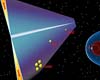
Using the ESA Cluster spacecraft and the NASA Wind and ACE satellites, a team of American and European scientists have discovered the largest jets of particles created between the Earth and the Sun by magnetic reconnection. This result makes the cover of this week's issue of Nature. |
|
|

| The content herein, unless otherwise known to be public domain, are Copyright 1995-2006 - SpaceDaily.AFP and UPI Wire Stories are copyright Agence France-Presse and United Press International. ESA PortalReports are copyright European Space Agency. All NASA sourced material is public domain. Additionalcopyrights may apply in whole or part to other bona fide parties. Advertising does not imply endorsement,agreement or approval of any opinions, statements or information provided by SpaceDaily on any Web page published or hosted by SpaceDaily. Privacy Statement |