|
 |
 |
 |
 |
 |
 |
 |
 |

 |
Natural Selection At Single Gene Demonstrated
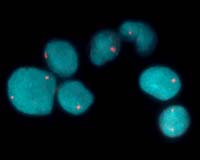
Los Angeles CA (SPX) Apr 26, 2006 Developed at the University of Southern California, test based on genomic data avoids pitfalls of older methods. Biologists seeking elusive proof of natural selection at the single-gene level have a powerful new tool at their disposal. Chris Toomajian, postdoctoral researcher in molecular and computational biology in the USC College of Letters, Arts and Sciences, led a group that sought to replace the standard neutral model, a common but unrealistic test for natural selection, with a statistical method based on hard genomic data. The group's research will be published online April 25 by Public Library of Science. "Do we now have enough data to see the standard neutral model wasn't appropriate?" Toomajian asked. "We know something more now about how the population has been structured." The standard neutral model makes improbable assumptions about population structure, such as assigning each individual an equal chance of reproducing. Co-author Magnus Nordborg, associate professor of molecular and computational biology in USC College, predicted that earlier research would need to be revisited because the model makes it too easy to infer selection at any given gene. "Once you start looking at enough cases then you realize that, oops, it's all under selection. I think a lot of that research is going to end up in the trash can," Nordborg said. The group's method can be applied to any organism, including humans. The PLoS paper focused on the weed Arabidopsis thaliana, and in particular on the FRIGIDA (FRI) gene, known to influence flowering time. A. thaliana was once a plant that bloomed annually. But two versions of FRI that appeared thousands of years ago enabled the plant to flower year-round, helping it out-compete other plants. Toomajian and his group showed that these two versions, also called gene variants, are too common to have spread solely by chance. "We've shown that for one gene with an important role in that [flowering] process, there's good evidence that there's natural selection changing the behavior of the plants," Toomajian said. Why the variants were selected remains unclear, though some have suggested that the plant evolved under pressure from the spread of agriculture. Toomajian's group identified the gene variants through a comparison of 96 plants over 1,102 short fragments of the genome. Each variant was assigned a score based on the similarity of two plants around the FRI gene relative to their similarity at other regions in the genome. The higher the score, the less likely it is that a variant could have arisen and spread randomly. The scoring formula accounts for the greater similarity expected in related plants. Nordborg said that while natural selection is well documented at the whole-organism level, researchers consider biochemical proof of selection "the Holy Grail" of population genetics. "What has proven very difficult is to connect specific molecular changes to selection," Nordborg said. The PLoS paper, along with other recent studies based on intrinsic genomic comparisons, brings biology closer to this goal. Community Email This Article Comment On This Article Related Links University of Southern California Darwin Today At TerraDaily.com
 Founding Chimp At Reserve Could Have Turned Killer
 Freetown (AFP) Apr 26, 2006
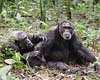
The first chimpanzee to join Sierra Leone's reserve for the animals is believed to have turned killer and is still at large, rangers said Tuesday. The 20-year-old animal, named Bruno, has been linked to the death of Sierra Leonean driver Issa Kanu, zoo officials said. |
|
|

| The content herein, unless otherwise known to be public domain, are Copyright 1995-2006 - SpaceDaily.AFP and UPI Wire Stories are copyright Agence France-Presse and United Press International. ESA PortalReports are copyright European Space Agency. All NASA sourced material is public domain. Additionalcopyrights may apply in whole or part to other bona fide parties. Advertising does not imply endorsement,agreement or approval of any opinions, statements or information provided by SpaceDaily on any Web page published or hosted by SpaceDaily. Privacy Statement |