|
 |
 |
 |
 |
 |
 |
 |
 |

 |
Natural Gas Nanotech
Laramie WY (SPX) Oct 31, 2007 Nanotechnology could revolutionize the natural gas industry across the whole lifecycle from extraction to pollution reduction or be an enormous missed opportunity, claim two industry experts writing in Inderscience's International Journal of Nanotechnology. They suggest that nanotechnology could help us extract more fuel and feedstock hydrocarbons from dwindling resources. However, industry inertia and a lack of awareness of the benefits could mean a missed opportunity. According to Saeid Mokhatab and Brian Towler of the Chemical and Petroleum Engineering Department, at the University of Wyoming, in Laramie, there are many opportunities for the industry to exploit nanotechnology. However, there is a traditional lack of innovation in the exploration and production sector, a perception of high costs, new risks, and a general lack of awareness of the benefits of nanotechnology. The researchers have now described the potential benefits of nanotechnology, which could change that perception. Mokhatab and Towler point out that nanomaterials, such as nanotubes or engineered porous minerals, might be used in the gas field or other source to improve the efficiency of extraction of a wide variety of hydrocarbon fuel compounds and chemical feedstocks. Similarly, related nanomaterials might be used to improve purification and storage of hydrocarbons, while yet other nanomaterials might be used in environmental remediation, allowing contaminated sites to be cleaned up of harmful pollutants. Nanomaterials might even be developed as corrosion inhibitors for equipment and at the same time, more sophisticated nanotechnology could be developed as solid-state gas sensors for air pollution monitoring. "The past decade has seen explosive growth worldwide in the synthesis and study of a wide range of nanostructured materials, the building blocks of nanotechnology," the researchers explain, "Investigations of mechanical, chemical, electrical, magnetic, and optical behavior of nanostructured materials have demonstrated the possibilities to engineer the properties of these new materials for a wide range of applications." The researchers add that as readily accessible hydrocarbon reserves become depleted, the oil and gas exploration and production industry faces increasing technical challenges. These challenges boil down to increased costs and limitations on drilling and production technologies. Community Email This Article Comment On This Article Related Links Nano Technology News From SpaceMart.com Computer Chip Architecture, Technology and Manufacture
 NIST Demos Industrial-Grade Nanowire Device Fabrication
 Washington DC (SPX) Oct 29, 2007
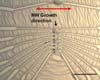
In the growing catalog of nanoscale technologies, nanowires-tiny rows of conductor or semiconductor atoms-have attracted a great deal of interest for their potential to build unique atomic-scale electronics. But before you can buy some at your local Nano Depot, manufacturers will need efficient, reliable methods to build them in quantity. Researchers at the National Institute of Standards and Technology (NIST) believe they have one solution-a technique that allows them to selectively grow nanowires on sapphire wafers in specific positions and orientations accurately enough to attach contacts and layer other circuit elements, all with conventional lithography techniques. |
|
|

| The content herein, unless otherwise known to be public domain, are Copyright 1995-2007 - SpaceDaily.AFP and UPI Wire Stories are copyright Agence France-Presse and United Press International. ESA Portal Reports are copyright European Space Agency. All NASA sourced material is public domain. Additional copyrights may apply in whole or part to other bona fide parties. Advertising does not imply endorsement,agreement or approval of any opinions, statements or information provided by SpaceDaily on any Web page published or hosted by SpaceDaily. Privacy Statement |