
 |
 |
 |
 |
 |
 |
 |
 |
 |

 |
Natural Disasters Illuminated by B-Movie Clips
Seattle - Nov 05, 2003 Movie clips, town meetings, debates and backgrounders for public affairs departments do not seem like assignments for a course on natural hazards, but in Penn State's "Earth 101 - Natural Disasters: Hollywood vs. Reality" class, these exercises out-distance and out-pace lectures. "To the casual observer of the course, it looks chaotic, a total disaster, noisy, unruly with very little lecturing," says Kevin P. Furlong, professor of geosciences. "But the course has a reputation of not being trivial and usually has about 60 percent honors students and athletes." Furlong notes that Earth 101 is the first class to fill up, even though it has 150 enrollment slots. Each semester the class covers five of the possible topics, which include volcanos, earthquakes, floods, and impacts from outer space, tornados, hurricanes and tsunamis. Each topic uses a different learning approach, but all include movie clips. The objective of the class, which is for non-science majors, is to teach critical thinking, how science works and how to make decisions on science-based topics. "It is much better to have people learn critical thinking on something they do not already have an opinion on," Furlong told attendees today (Nov. 4) at the annual meeting of the Geological Society of America in Seattle. "No one has religious or political opinions on hurricanes." The students can begin to understand the issues surrounding observation versus interpretation. They can learn how to determine the specific information needed to understand something and also how to get that information. "Why use movie clips?" Asks Furlong. "Because while students will laugh at a movie clip that is obviously and patently scientifically wrong, they would not laugh at a newspaper article that contained incorrect information." Some of the movie clips used include "Deep Impact" and "Dinosaur" when studying impacts from outer space; "Volcano" and "Dante's Peak" when studying volcanos; "Earthquake NY," "Earthquake" and "The San Francisco Earthquake" for earthquakes; "Tidal Wave No Escape" for tsunamis; and "Twister" for tornados. Furlong notes that the most accurate of these is the 1930s "San Francisco Earthquake." "When we ask students about the class, they say that they do not work hard at all on the assignments," says Furlong. "But, the students actually work very hard in this course. I think the students think it is an easy course because they really enjoy the projects they are working on and so do not mind the actual time spent." Groups of students prepare public affairs manuals for cities that actually have earthquake histories and current threats. Each student will work up a chapter on a specific aspect needed by governmental people who deal with natural disasters such as earthquakes. There would be chapters on the local history of earthquakes, local geology, infrastructure, earthquakes in general, nature of the emergency management system. "We do this for 15 cities internationally with earthquake hazard potential," says Furlong. "We also give extra credit if the book falls together well, but we do not penalize the individuals if there is a slacker in their midst." Small groups of students are assigned debate topics such as whether or not it is appropriate for the government to choose an elite group of citizens to save in the event of an impact from outer space. The entire class judges the debates, which must be based on factual evidence, not emotion. In a large in-class project, students become proxies for the inhabitants of a small town in Washington State where the local High School is directly in the path of a lahar - a volcanic mud flow. Assigned to be either the 56 percent of the population that is retired, young professionals, unemployed, or members of the PTA or chamber of commerce, the students investigate solutions to the high school problem. With the school complex in the path of the mud flow, the options are to do nothing, move the school or put in a lahar warning system. The warning system would provide 30 to 40 minutes advance warning to evacuate the school. After extensive research by the students and role playing, the town, named Ourtown and situated in the path of lahars from Mt. Mayhem, holds a town meeting to vote on the school issue. "Not surprisingly, in most classes, the students vote exactly the way the population of the real town, Orting, Wash., voted," says Furlong. "They vote to install the warning system, even though it was shown that it requires longer than 40 minutes to evacuate the students to a safe area." The course, which was developed by Furlong and Jaime Whitlock, now at Colorado State University, and is taught by others as well, requires a final project that is fairly open. The projects are usually related to the students' majors and have included teaching modules for third graders and an informative video on volcanos. "We are bringing the information to them using media, things that engage the students," says Furlong. "They invest effort and it becomes part of their lives. We think this is a more appropriate way in the long term to encourage critical thinking, learn how to make informed choices based on potential impacts, whether they be political, social or physical." Community Email This Article Comment On This Article Related Links Pennsylvania State University SpaceDaily Search SpaceDaily Subscribe To SpaceDaily Express Earth Observation News - Suppiliers, Technology and Application
 New Legislation Initiated To Support Commercial Remote Sensing Industry
 New York NY (SPX) Jan 11, 2006
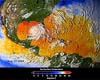
The importance of remotely sensed data and technologies to support natural disasters has prompted attention and action in Washington. New initiatives and legislation authorizing appropriations to the remote sensing industry will be discussed at Strategic Research Institute's U.S. Commercial Remote Sensing Industry conference, scheduled for February 9-10, 2006 in Washington D.C. |
|
|

| The content herein, unless otherwise known to be public domain, are Copyright 1995-2006 - SpaceDaily.AFP and UPI Wire Stories are copyright Agence France-Presse and United Press International. ESA PortalReports are copyright European Space Agency. All NASA sourced material is public domain. Additionalcopyrights may apply in whole or part to other bona fide parties. Advertising does not imply endorsement,agreement or approval of any opinions, statements or information provided by SpaceDaily on any Web page published or hosted by SpaceDaily. Privacy Statement |

