|
 |
 |
 |
 |
 |
 |
 |
 |

 |
Nanorobot Fabrication Makes Ultrasmall Sensors Possible
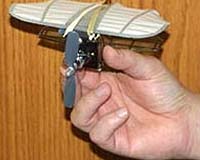
Washington (SPX) Oct 24, 2005 How do you build an infrared (IR) camera that is small enough to fit on a mini-unmanned aerial vehicle (UAV) without cryogenic cooling? Call in the nanobots. Researchers working with the Office of Naval Research (ONR) have developed a way to build extremely small sensors using nanorobot fabrication. This new process, created by Harold Szu and James Buss of ONR and implemented by Xi Ning of Michigan State University, allows a human operator using a powerful microscope and hand-held controller to manipulate nano-sized contact points remotely--like using extremely small hands--to construct the pixel elements that will form the heart of the sensor. Each pixel will be composed of carbon nanotubes, which have nanoscale diameters and submicron lengths. Because of the one-dimensional nature of carbon nanotubes, they have significantly lower thermal noise than traditional semi-conductors. A full-sized camera incorporating this technology would be inexpensive and lightweight--about one tenth the cost, weight, and size of a conventional digital camera. The reason for making such a small sensor has to do with the largest of things--protecting multibillion-dollar aircraft carriers and their thousands of Sailors. Today, missiles have gotten smaller, stealthier, and more difficult to detect than ever--and you don't need to have the budget of a superpower (or even be a power at all) to buy or manufacture them. To improve the ability of carrier strike groups to detect these missiles over the horizon, the U.S. Navy is searching for ways to augment its surveillance capabilities with a covert team of mini-UAVs equipped with passive sensors that can cruise near the ocean surface at slow speeds for many hours. One of the salient features distinguishing a missile plume from flare camouflage is the unique characteristics of a plume's IR signature, especially in the mid-IR spectrum. The signal-to-noise ratio of a conventional IR detector array operating in the ocean environment, however, demands the use of cumbersome liquid nitrogen cryogenic cooling for all current mid-IR spectrum cameras. Unfortunately, a mini-UAV's payload limitation does not allow such a bulky technology on board--but a small UAV is possible with the advent of nano-based sensors. The proposed IR camera is being considered for other applications as well, including the field of breast cancer detection. "This new technology will revolutionize how sensors, cameras, and countless other medical devices will be made by a nanorobot, which can respond to public demands of non-contact examinations for early cancer screening at every household," said Father Giofranco Basti of the Pontifical Lateran University at the Vatican City, Rome, Italy. Next spring, the university will conduct a screening test bed of early breast tumor treatment using this new technology in collaboration with ONR. Community Email This Article Comment On This Article Related Links ONR Michigan State University SpaceDaily Search SpaceDaily Subscribe To SpaceDaily Express UAV News - Suppliers and Technology
 USAF UAV Battlelab Sponsors Demo Of Proxy Aviation's SkyForce
 Germantown MD (SPX) Jan 11, 2006
Proxy Aviation Systems recently announced the United States Air Force (USAF) Unmanned Aerial Vehicle Battlelab (UAVB) sponsored and cooperated in a demonstration of SkyForce, Proxy Aviation's unmanned aircraft system. |
|
|

| The content herein, unless otherwise known to be public domain, are Copyright 1995-2006 - SpaceDaily.AFP and UPI Wire Stories are copyright Agence France-Presse and United Press International. ESA PortalReports are copyright European Space Agency. All NASA sourced material is public domain. Additionalcopyrights may apply in whole or part to other bona fide parties. Advertising does not imply endorsement,agreement or approval of any opinions, statements or information provided by SpaceDaily on any Web page published or hosted by SpaceDaily. Privacy Statement |