|
 |
 |
 |
 |
 |
 |
 |
 |

 |
Nanobac Life Sciences Announces Space Act Agreement With NASA
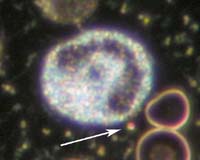
Tampa FL (SPX) Sep 17, 2004 Nanobac Life Sciences, Inc. is pleased to announce the signing of a Space Act Agreement with NASA's Johnson Space Center (JSC), Houston Texas, to collaborate on research on Nanobacteria and its nature and role in pathological calcification, including the detection and treatment of the pathogen. Since Astronauts may be more prone to an increased rate of pathological calcification while in a zero gravity environment, the collaboration will bring a new approach to NASA's need to better understand the effects of long-term space travel on humans. In addition, Nanobac's work provides a model for studying mineralized organic matters that could aid NASA in the search for extraterrestrial life. Nanobac co-founder and Director of Science, Neva Ciftcioglu, Ph.D. will remain at NASA JSC as Senior Scientist and principal researcher. Under the agreement, NASA will provide workspace at JSC for Nanobac's personnel located at JSC. The agreement further provides Nanobac the opportunity to work together with a multidisciplinary team of NASA researchers while having access to basic laboratory services for nanobacteria science, including electron microscopy, molecular biology and geology-mineralogy research facilities. Projects ranging from searching for nanobacteria biosignatures in earth fossils and in Mars meteorites to diagnosing and treating nanobacteria infection are anticipated. Nanobac will provide JSC with equipment and specialty supplies for nanobacteria research and apply its pioneering diagnostic and treatment experience in the field. "We are pleased to be able to provide our Director of Science to NASA for these important projects," commented John Stanton, Nanobac's President and Chief Executive Officer. "We look forward to a very rich and rewarding research collaboration with NASA. We appreciate the opportunity to work with some of the country's most talented scientists." This announcement shall not be construed to imply that NASA currently or in the future endorses or sponsors any NANOBAC product or service. About Nanobacteria Nanobacterium sanguineum (nanobacteria) is the smallest self-replicating organism ever detected - at 50 to 500 billionths of a meter, 1/1000th the size of the smallest previously known bacteria. Nanobacteria have been implicated in a variety of human diseases associated with pathological calcification. Nanobacteria were first discovered in 1988 by a Finnish researcher, and Nanobac OY co-Founder Olavi Kajander, M.D., Ph.D. Medical microbiologist Neva Ciftcioglu, Ph.D. joined his team in 1991 and their corroborated work with nanobacteria over the past 13 years has put them at the forefront of research into this medically important pathogen. Their research established that the blood-borne nanobacteria forms slow-growing calcified colonies in arteries and organs. Nanobac has identified two biomarkers of nanobacterial infection. These tests are being developed as the NB2 test, which is composed of the nanobacteria antigen test, and the nanobacteria IgG antibody test. The Nanobac IgG test is designed to measure the body's immune response to the nanobacterial infection. The Company is in the final stages of development of the nanobacteria antigen test. Community Email This Article Comment On This Article Related Links Nanobac Lifesciences SpaceDaily Search SpaceDaily Subscribe To SpaceDaily Express Dirt, rocks and all the stuff we stand on firmly
 Magnetic Reconnection Region Larger Than 2.5 Million Km Found In The Solar Wind
 Paris (ESA) Jan 12, 2006
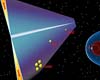
Using the ESA Cluster spacecraft and the NASA Wind and ACE satellites, a team of American and European scientists have discovered the largest jets of particles created between the Earth and the Sun by magnetic reconnection. This result makes the cover of this week's issue of Nature. |
|
|

| The content herein, unless otherwise known to be public domain, are Copyright 1995-2006 - SpaceDaily.AFP and UPI Wire Stories are copyright Agence France-Presse and United Press International. ESA PortalReports are copyright European Space Agency. All NASA sourced material is public domain. Additionalcopyrights may apply in whole or part to other bona fide parties. Advertising does not imply endorsement,agreement or approval of any opinions, statements or information provided by SpaceDaily on any Web page published or hosted by SpaceDaily. Privacy Statement |