|
 |
 |
 |
 |
 |
 |
 |
 |

 |
Nano World: Springy Cushions Of Nanotubes
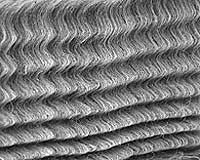
New York (UPI) Nov 25, 2005 Super-resilient foams made of carbon tubes only nanometers or billionths of a meter wide that act like springs could help cushion blows in artificial joints or dampen vibrations in microscopic devices, experts told UPI's Nano World. Repeatedly compressing a cushion normally squashes it thin, making it lose its springiness. The nanotube foams retained their springiness even after 10,000 squeezes, said materials scientist Pulickel Ajayan of Rensselaer Polytechnic Institute in Troy, N.Y. Ajayan with materials scientist Anyuan Cao at the University of Hawaii at Manoa and their colleagues experimented with carbon nanotubes arranged vertically like forests. They found the nanotubes "can be squeezed to less than 15 percent of their normal lengths by buckling and folding themselves like springs," Cao said. "After every cycle of compression, the nanotubes unfold and recover, producing a strong cushioning effect." Normally there is a tradeoff between stiffness and compressibility in materials. Stiff materials may take a lot of force to budge, but they often break once their limits are exceeded. Compressible materials do not take a lot of force to budge, but can return to their usual shape afterward with little to no damage. Carbon nanotubes are both stiff and compressible -- they require a lot of force to compress, but do not break once that limit is exceeded and can rebound back to normal. When compared with conventional foams designed to sustain large strains, nanotube foams recovered very quickly. Throughout the experiments, the foams also did not fracture, tear, or collapse. Ajayan and his colleagues report their findings in the November 25 issue of the journal Science. "Interesting applications might result from this fascinating discovery that nanotube forests behave like a weird kind of super-compressible foam," said Ray Baughman, director of the University of Texas at Dallas NanoTech Institute. He speculates the thermal conductivity of the nanotubes might dramatically increase as they are compressed, suggesting squashed nanotube foams could help transfer heat away from electronics. "As the density of circuit components increase, the problem of heat becomes more and more severe," Baughman said. Ajayan also suggested these nanotube foams could find use in medical applications, "where you want to replace a joint and have a compressible kind of structure. This could be a nice material for that." Moreover, Ajayan said nanotube foams could be used as energy-absorbing systems in microelectromechanical systems to dampen vibrations. "When devices are small, vibrations can have a lot of effects, with such noise interfering with operations and measurements. You would certainly want materials that would allow for good dampening," he explained. In addition, the researchers employed multi-walled nanotubes in their preliminary devices, where nanotubes are arranged concentrically within each other. Future designs could incorporate single-walled nanotubes, which are harder to work with but are much stronger, Ajayan said. Community Email This Article Comment On This Article Related Links Rensselaer Polytechnic Institute SpaceDaily Search SpaceDaily Subscribe To SpaceDaily Express Carbon Worlds - where graphite, diamond, amorphous, fullerenes meet
 Nano Interfaces With Cells
 New York (UPI) Jan 04, 2006
Coatings made with titanium and peppered with pores only nanometers or billionths of a meter wide could help interface living cells with electronics for prosthetics and other advanced devices, experts told UPI's Nano World. |
|
|

| The content herein, unless otherwise known to be public domain, are Copyright 1995-2006 - SpaceDaily.AFP and UPI Wire Stories are copyright Agence France-Presse and United Press International. ESA PortalReports are copyright European Space Agency. All NASA sourced material is public domain. Additionalcopyrights may apply in whole or part to other bona fide parties. Advertising does not imply endorsement,agreement or approval of any opinions, statements or information provided by SpaceDaily on any Web page published or hosted by SpaceDaily. Privacy Statement |