|
 |
 |
 |
 |
 |
 |
 |
 |

 |
NOAA Reports Above-Normal Atlantic Hurricane Season
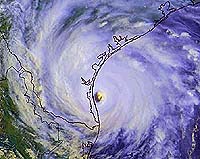
Washington - Dec 02, 2003 With the 2003 Atlantic hurricane season having officially ended Nov. 30, NOAA hurricane specialists said the above-normal 2003 Atlantic hurricane season produced 14 tropical storms, of which 7 became hurricanes and 3 became major hurricanes (Fabian, Isabel and Kate). Six of the named systems affected the United States, bringing high wind, storm surge or rain. "NOAA's Climate Prediction Center, Hurricane Research Division and National Hurricane Center identified the high likelihood of an above-normal Atlantic hurricane season as early as May," said John Jones, deputy director of the NOAA National Weather Service. "We expected an above normal season based in part on the wind, air pressure and ocean temperature patterns that recur annually for decades at a time and favor active hurricane seasons. These patterns make up the active phase of the Atlantic's multi-decadal signal." Gerry Bell, head of NOAA's long-range hurricane forecast team, said, "These conditions were in place by early August, setting the stage for a very busy season." Notable hurricanes during 2003 included: Claudette, which struck Texas near Matagorda Island; Isabel, which became one of the strongest hurricanes on record with maximum sustained winds of 165 mph; Juan, the worst hurricane to hit Halifax, Nova Scotia, in modern history; and Fabian, the most destructive hurricane to hit Bermuda in more than 75 years. Hurricane Isabel brought record storm surge flooding to the upper Chesapeake Bay, including the Washington, D.C., Baltimore, and Annapolis, Md., waterfronts. Tropical storm conditions extended over much of the rest of the region from North Carolina northward to Long Island, N.Y., as the storm made landfall. The backbone of this year's hurricane forecast guidance was provided by the NOAA Environmental Modeling Center and Geophysical Fluid Dynamics Laboratory computer models. "These model forecasts made during the 2003 Atlantic hurricane season were the most accurate three-day track forecasts ever. Hurricane Isabel's model forecasts were the most accurate in terms of track and wave generation," said Naomi Surgi, EMC's advanced project leader for hurricanes. The EMC is currently working on the next generation model named the Weather and Research Forecasting System for Hurricanes. This system of even more sophisticated computer models will improve forecasts of hurricane track, hurricane intensity, hurricane rainfall and wave forecasts. Noting that 2003 marks the first year NOAA has issued operational five-day track and intensity forecasts, Max Mayfield, director of the NOAA National Hurricane Center, said, "In the case of powerful Hurricane Isabel, these longer-range forecasts were useful for planning purposes all along the East Coast." The critical mission of the NOAA National Weather Service is the protection of life and property, and to provide better and timelier warnings to the American public. The period 1995-2003 has been the most active for Atlantic hurricanes in the historical record. Since 1995 seven of nine seasons have been above-normal (the exceptions being the El Ni�o years of 1997 and 2002). "We are concerned that this increased activity will continue in the coming years," said Jim Laver, director of the NOAA Climate Prediction Center. "Since NOAA began making Seasonal Atlantic Hurricane Outlooks in 1998, we have correctly predicted the levels of activity in every season by the August update." The NOAA National Weather Service is the primary source for weather data, forecasts and warnings for the United States and its territories. The NOAA National Weather Service operates the most advanced weather and flood warning and forecast system in the world, helping to protect lives and property and enhance the national economy. NOAA is dedicated to enhancing economic security and national safety through the prediction and research of weather and climate-related events and providing environmental stewardship of the nation's coastal and marine resources. NOAA is part of the U.S. Department of Commerce. Community Email This Article Comment On This Article Related Links Details of the 2003 Hurricane Season Storms NOAA National Hurricane Center NOAA Hurricane Research Division NOAA Climate Prediction Center SpaceDaily Search SpaceDaily Subscribe To SpaceDaily Express Dirt, rocks and all the stuff we stand on firmly
 Rescuers Seek Survivors As Phillipines Storm Leaves 300 Dead, 150 Missing
 Real, Philippines (AFP) Nov 30, 2004
Rescuers were desperately searching for survivors Tuesday after floods and landslides unleashed by a tropical storm in the Philippines killed more than 300 people and left at least 150 others missing, many buried alive under tonnes of debris. |
|
|

| The content herein, unless otherwise known to be public domain, are Copyright 1995-2006 - SpaceDaily.AFP and UPI Wire Stories are copyright Agence France-Presse and United Press International. ESA PortalReports are copyright European Space Agency. All NASA sourced material is public domain. Additionalcopyrights may apply in whole or part to other bona fide parties. Advertising does not imply endorsement,agreement or approval of any opinions, statements or information provided by SpaceDaily on any Web page published or hosted by SpaceDaily. Privacy Statement |