|
 |
 |
 |
 |
 |
 |
 |
 |

 |
NIH Launches First Center In Nationwide Chemical Genomics Network
Bethesda MD (SPX) Jun 10, 2004 The National Institutes of Health (NIH) today announced the establishment of the NIH Chemical Genomics Center � the first component of a nationwide network that will produce innovative chemical "tools" for use in biological research and drug development. "Providing public-sector researchers with this unprecedented opportunity will greatly broaden the scope of biological exploration," said NIH Director Elias A. Zerhouni, M.D. "The NIH-supported chemical genomics network will have a transformative effect on medical research by expanding our understanding of how the human genome and proteome function, which in turn will speed the development of new ways to fight disease and improve human health." In contrast to researchers in the pharmaceutical industry, many academic and government scientists currently do not have easy access to large libraries of organic chemical compounds. Such compounds, which scientists call "small molecules" because they are smaller than proteins, can be used as tools to modulate gene function and improve understanding of biological pathways involved in human health and disease. This area of research is often referred to as chemical genomics. Established through the Molecular Libraries and Imaging working group of the recently announced NIH Roadmap for Medical Research, the NIH Chemical Genomics Center is based in the National Human Genome Research Institute's (NHGRI) Division of Intramural Research. It is the first component of an initiative that will result in a consortium of chemical genomics screening centers. In addition to NHGRI, the National Institute of Mental Health (NIMH) is providing leadership for this initiative, which, like all of the Roadmap initiatives, includes representation from numerous NIH institutes and centers. Up to 10 pilot centers will be funded at academic institutions and other locations across the country in Fiscal Year (FY) 2005. "These chemical genomics centers will be coordinated to build a network in the academic research community for identifying a broad range of small molecules with promising properties for biological research," said NIMH Director Thomas R. Insel, M.D. To support the network, NIH plans to establish a repository to acquire, maintain and distribute a collection of up to 1 million chemical compounds. As was the case for the Human Genome Project, data generated by the chemical genomics network will be deposited in a central database, called PubChem, which will be managed by the National Center for Biotechnology Information at the National Library of Medicine and will be freely available to the entire scientific community. "Our effort will build upon what has been learned by the pharmaceutical industry, but it should not be viewed as an effort to turn public sector researchers into drug developers," said NHGRI Director Francis S. Collins, M.D., Ph.D. "What we are doing is simply giving academic and government researchers a chance to contribute in a much more vigorous way to the earliest stages of the drug development pipeline: the identification of useful biological targets. This is a win-win situation for basic biology, for the drug industry and, most importantly, for the American public." Christopher P. Austin, M.D., who is NHGRI's senior advisor for translational research, will direct the NIH Chemical Genomics Center. The center, which will have a staff of about 50 scientists, plans to begin high-throughput screening of small molecules by the end of 2004. While most marketed drugs are small molecules � and this class of chemicals has been the focus of intense screening efforts by the pharmaceutical industry for many years � researchers in academia, government and non-profit research institutions traditionally have not been able to tap into large libraries of these compounds. In addition, pharmaceutical research tends to focus on small molecules that act upon a relatively narrow group of molecular targets with known relevance to human disease. The chemical genomics center network will explore the vast majority of the human genome for which no small-molecule chemical probes have been identified. Of the hundreds of thousands of proteins thought to be encoded by the 25,000 genes in the human genome, less than 500 currently have a chemical compound with which they interact. With an eye toward expanding the frontiers of genomic exploration, the NIH Chemical Genomics Center plans to screen more than 100,000 small-molecule compounds in multiple high-throughput assays within its first year of operation. "Screening on the scale we are planning is unprecedented outside of the pharmaceutical and biotechnology industries. For the first time, biologists in the public sector will be able to take full advantage of the tremendous power of small molecules to serve as probes to advance our understanding of biology," said Dr. Austin. To help achieve its ambitious goals, the NIH Chemical Genomics Center has selected a suite of ultra-high throughput target and pathway screening technologies from Kalypsys, Inc. of San Diego. The Kalypsys agreement, valued at up to $30 million over the course of a four-year contract if all options are exercised, will deliver to the NIH center a suite of technologies, materials and services, including a highly automated robotic system capable of screening more than 1 million compounds per day in a variety of biochemical and cellular assays. The Kalypsys system features an innovative, rapid parallel assay process that uses proprietary robotic and liquid-handling technologies to dispense cells or proteins onto 4x6 inch plates, each containing 1,536 microwells. The system then transfers a different chemical compound into each well, and the wells are examined by computerized scanners to assess the effect of each compound on the cells or protein. For example, one compound may activate a particular function in a cell, while others may have the opposite effect or no effect at all. In addition to cells and proteins, the Kalypsys system will offer researchers the ability to screen small, whole organisms, such as zebrafish embryos or yeast, against a large array of chemical compounds. Data gleaned from the screening effort will shed new light on the function of various genes and the roles that specific genes play in pathways crucial to biological function. Ultimately, researchers hope the information generated by the chemical genomics network will identify new targets for therapy and tools to study them, thereby enabling such targets to move more rapidly through the drug development pipeline. Also today, Dr. Austin announced that Jim Inglese, Ph.D., has been appointed head of biomolecular screening in the NIH Chemical Genomics Center. "We are very excited that a researcher of Dr. Inglese's stature in the pharmaceutical and chemical genomics communities is joining our team. His expertise in high-throughput screening technologies and assay development will be a tremendous asset to our center," said Dr. Austin, noting that Dr. Inglese comes to NHGRI from Merck Research Laboratories in North Wales, Pa., where he was a senior research fellow in the automated biotechnology group. Dr. Inglese received a B.S. in Chemistry from the Rensselaer Polytechnic Institute, Troy, N.Y., in 1984, and a Ph.D. in Organic Chemistry from Pennsylvania State University, University Park, Pa., in 1989. He is the founding editor and editor-in-chief of the peer-reviewed journal, ASSAY and Drug Development Technologies. Community Email This Article Comment On This Article Related Links NIH Roadmap NHGRI NIH SpaceDaily Search SpaceDaily Subscribe To SpaceDaily Express Space Medicine Technology and Systems
 Genomic Sequences Processed In Minutes, Rather Than Weeks
 Richland WA (SPX) Jun 22, 2005
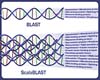
A new computational tool developed at the Department of Energy's Pacific Northwest National Laboratory is speeding up our understanding of the machinery of life - bringing us one step closer to curing diseases, finding safer ways to clean the environment and protecting the country against biological threats. |
|
|

| The content herein, unless otherwise known to be public domain, are Copyright 1995-2006 - SpaceDaily.AFP and UPI Wire Stories are copyright Agence France-Presse and United Press International. ESA PortalReports are copyright European Space Agency. All NASA sourced material is public domain. Additionalcopyrights may apply in whole or part to other bona fide parties. Advertising does not imply endorsement,agreement or approval of any opinions, statements or information provided by SpaceDaily on any Web page published or hosted by SpaceDaily. Privacy Statement |