|
 |
 |
 |
 |
 |
 |
 |
 |

 |
NIAID Awards Grants To Develop Anti-Radiation Treatments
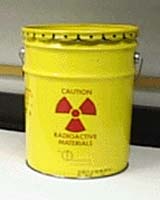
Washington DC (SPX) Sep 26, 2006 The National Institute of Allergy and Infectious Diseases (NIAID), part of the National Institutes of Health (NIH), has issued five awards totaling $4 million to fund the development of products that eliminate radioactive materials from the human body following radiological or nuclear exposure. The awards, which were granted under Project Bioshield authorities, complement NIAID's other medical countermeasure efforts to create safe and effective products of this type. "These new grants will help identify new drug candidates that could be acquired by the strategic national stockpile of medical countermeasures, which is available to the public after a terrorist or nuclear attack or accidental radioactive exposure," says NIAID Director Anthony S. Fauci, M.D. In the event of an attack by a nuclear explosive device or radiological "dirty bomb," individuals potentially could inhale, ingest or absorb through their skin radioactive atoms called radionuclides. Depending on the type of radionuclide that a person is exposed to, the particles may be excreted from the body or enter bones, organs or other tissues, which could have significant adverse health consequences. Through an initiative announced in 2005, NIAID already is working to speed the development of a series of products that can bind (chelate) internally with the radionuclides and eliminate (decorporate) them from the body. Radionuclide decorporation products currently are available in the strategic national stockpile, but NIAID is focusing on expanding the product pool, creating new treatments capable of eliminating a wider range of radionuclides, developing products that can eliminate radioactive material faster and in greater amounts; and developing products in formulations that could be distributed more easily in a mass casualty situation. NIAID has awarded five grants totaling up to $4 million to fund work for a period of 18 months. The following principal investigators and universities are the recipients of the grants:
+ Raymond J. Bergeron, Ph.D., University of Florida, Gainesville, $1.0 million "The goal of this new program is to accelerate the development of previously identified, promising compounds into effective products that could be licensed for use," says program officer Bert Maidment, Ph.D., associate director of product development in NIAID's Division of Allergy, Immunology and Transplantation. Community Email This Article Comment On This Article Related Links NIAID Civil Nuclear Energy Science, Technology and News Space Tourism, Space Transport and Space Exploration News
 NASA Announces New Advisory Council Members
 Greenbelt Md (SPX) Sep 26, 2006
NASA Administrator Michael Griffin named nine new members to the NASA Advisory Council on Friday, including Dr. Edward David, Jr., Chair of the Science Committee, and Dr. Paul Robinson, Chair of the new Space Operations Committee. "These outstanding individuals will add to an already strong group and will greatly assist Chairman Schmitt in meeting the Council's goals," Griffin said. |
|
|

| The content herein, unless otherwise known to be public domain, are Copyright 1995-2006 - SpaceDaily.AFP and UPI Wire Stories are copyright Agence France-Presse and United Press International. ESA PortalReports are copyright European Space Agency. All NASA sourced material is public domain. Additionalcopyrights may apply in whole or part to other bona fide parties. Advertising does not imply endorsement,agreement or approval of any opinions, statements or information provided by SpaceDaily on any Web page published or hosted by SpaceDaily. Privacy Statement |