|
 |
 |
 |
 |
 |
 |
 |
 |

 |
NGC Enters Second Phase Of USAF Next-Generation Polar Communications Payload
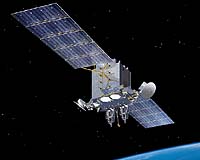
Redondo Beach CA (SPX) Dec 07, 2006 Northrop Grumman has completed Phase I of a study contract to assist the U.S. Air Force in defining a payload for next-generation polar military satellite communications. The architecture proposed by the company's Space Technology sector for the Enhanced Polar System (EPS) addresses the Air Force's interest in an affordable, low-risk solution by significantly leveraging designs, flight hardware and software, procedures, testing and documentation recently developed under the Advanced Extremely High Frequency (EHF) military satellite communications payload program. "The availability of heritage Advanced EHF payload products developed at Northrop Grumman enables an EPS communications payload solution that can be confidently built, and deployed within an abbreviated time span," said Stuart Linsky, vice president of satellite communications for Northrop Grumman's Space Technology sector. The EPS will provide joint, interoperable and protected satellite communications in the northern polar region to user terminals compatible with the Advanced EHF satellite system, which is now in flight production. The new military satellite communications system would replace the current Interim Polar System, which is limited to Milstar-compatible low-data rate service. The EPS payload, using Advanced EHF's advanced XDR waveforms, will provide much higher data rates, extended high-gain coverage and will be interoperable with next-generation Advanced EHF-compatible sea-based, ground and airborne user terminals. Under the six-month, $1.5 million study, Northrop Grumman completed a low risk, detailed payload architecture that provides required communications capabilities within the EPS platform's physical constraints and schedule requirements. Products generated on the study are currently being used by the Air Force to support acquisition planning for a future payload flight development program. The Air Force's MILSATCOM Systems Wing at the Space and Missile Systems Center at Los Angeles Air Force Base is leading the EPS payload study. Northrop Grumman has also been awarded a 14-month, $8.4 million Phase II study. The company will further reduce risk to the production schedule by defining interface-specific design details, planning the seamless flight production line transition from Advanced EHF to EPS, and performing other selected tasks. "The Phase II contract will allow us to hit the ground running when we start flight production of the Polar Payload," Linsky said. Community Email This Article Comment On This Article Related Links Northrop Grumman Read the latest in Military Space Communications Technology at SpaceWar.com Read the latest in Military Space Communications Technology at SpaceWar.com
 L-3 Demonstrates Production-Ready Net-Centric MP-CDL Using Multiple Aircraft
  New York NY (SPX) Dec 14, 2006
L-3 Communications has announced the successful completion of flight tests of its IP-enabled, wideband Multi-Platform Common Data Link at Kirtland Air Force Base, New Mexico. Flying multiple missions on two Big Crow NKC-135 aircraft, L-3's MP-CDL demonstrated high capacity net-centric communications between aircraft and from the aircraft to the Global Information Grid, the Internet, and the public switched telephone network using the Department of Defense's Network CDL, Standard CDL, and Advanced CDL waveforms at data rates up to 274 Mbps and ranges beyond 300 nautical miles. |
|
|

| The content herein, unless otherwise known to be public domain, are Copyright 1995-2006 - SpaceDaily.AFP and UPI Wire Stories are copyright Agence France-Presse and United Press International. ESA PortalReports are copyright European Space Agency. All NASA sourced material is public domain. Additionalcopyrights may apply in whole or part to other bona fide parties. Advertising does not imply endorsement,agreement or approval of any opinions, statements or information provided by SpaceDaily on any Web page published or hosted by SpaceDaily. Privacy Statement |