
 |
 |
 |
 |
 |
 |
 |
 |
 |

 |
NEAP Assessed As Feasible
San Diego - August 27, 1998 - SpaceDev said Wednesday that a team of independent reviewers has concluded that the Near Earth Asteroid Prospector (NEAP) mission design, spacecraft design, and project budget are feasible. The Project Assessment Team was led by Tony Spear, Mars Pathfinder Project Manager, who recently retired from NASA's Jet Propulsion Laboratory (JPL) after thirty years of successful deep space science missions. The team consisted of Spear's hand picked deep space experts from various organizations including JPL. "We commissioned Mr. Spear's study because we believe his team consists of some of the most respected and accomplished deep-space experts in the world," said Jim Benson, president and chief executive officer of SpaceDev. The team concluded that the NEAP mission conceptual design is sound and the mission could be flown within $50 million, including launch cost. "We are pleased with their findings and we intend to use Mr. Spear's report as a roadmap to complete this mission on time and within our original $50 million estimate announced in September of last year," said Benson. Spear's team made several specific recommendations for optimizing the NEAP spacecraft to the Nereus carbonaceous asteroid target, the new NEAP target selected as a result of the Spear study. Mission recommendations included possibly adding revenue-producing lunar or near-Earth payloads that could be accommodated in the early parts of the mission, simplifying the avionics architecture, and designing a schedule based on Spear's years of deep space science mission experience. "Mr. Spear recommended a pre-project phase to initiate detailed project planning and design, project team forming, and long lead procurements," Benson commented. "This pre-project phase would extend from September 1998 to April 1999. At that time a two-year development phase would start, supporting the planned launch date in April 2001." One member of the team, Dr. Robert Farquhar of Johns Hopkins University's Applied Physics Laboratory (APL), recommended fundamental simplifications to the propulsion system that could result in a more reliable and less expensive solution. Dr. Farquhar is the Mission Director of APL's Near Earth Asteroid Rendezvous (NEAR) project. He validated and refined the mission and trajectory design work that was pioneered by Dr. Alan Schneider at the University of California, San Diego (UCSD) in the early design phases of the NEAP mission. Dr. Farquhar's input reduced deep space cruise time by four months. Dr. Farquhar and Dr. Donald Yeomans, a senior research scientist at JPL, first identified Nereus as one of the most scientifically interesting objects that NEAP could visit. The pair also performed a preliminary analysis of the possible trajectory available to NEAP to reach Nereus and concluded that such a mission would need relatively little fuel and little time. Both features lead to a simpler, smaller spacecraft than was first anticipated. "We were truly fortunate to have so many of the world's leading scientists and engineers provide their expertise to this mission design, and we fully intend to utilize the advice they have provided us," added Benson. "Overall, these recommendations, and the choice of Nereus as the 'quintessential' target asteroid have allowed us to simplify and miniaturize the spacecraft, which we believe leads to a less expensive and even more feasible mission. As an example, the smaller NEAP spacecraft now being designed for Nereus can be launched by a much wider variety of commercially available rockets, giving us greater flexibility in selecting a low-cost launch provider." The new NEAP orbits could include close lunar swing-bys that could serve as excellent practice runs for operations at Nereus. The company plans to calculate as many lunar swing-bys as possible for the nine months available, including half-month "backflips" and double-lunar swing-by orbits similar to those used by the ISEE-3 spacecraft in 1983. Some of the swing-bys will be designed to fly as close to the moon as is safely possible, and perhaps fly low over polar craters where lunar water is believed to exist. It is intended that the injection from the parking orbit will be directed into a high- altitude "phasing" orbit whose apogee would be only slightly beyond the moon's orbit. SpaceDev, the world's first commercial space exploration and development company, intends to launch the first privately financed spacecraft to land on another planetary body. SpaceDev is selling rides for scientific instruments to governments and companies to transport their instruments and experiments through deep space to a near Earth asteroid. SpaceDev intends to sell the data acquired by its instruments as commercial products. Colorado-based SpaceDev has offices in San Diego, CA and Washington, DC. FYI The foregoing press release includes numerous forward-looking statements concerning the company's business and future prospects and other similar statements that do not concern matters of historical fact. The federal securities laws provide a limited "safe harbor" for certain forward-looking statements. Forward-looking statements in this press release relating to product development, business prospects and development of a commercial market for technological advances are based on the company's current expectations. The company's current expectations are subject to all of the uncertainties and risks customarily associated with new business ventures including, but not limited to, market conditions, successful product development and acceptance, competition and overall economic conditions, as well as the risk of adverse regulatory actions. The company's actual results may differ materially from current expectations. Readers are cautioned not to put undue reliance on forward-looking statements. The company disclaims any intent or obligation to update publicly these forward-looking statements, whether as a result of new information, future events or for any other reason.
Email This Article Comment On This Article Related Links Space
 Satellite Launch To Boost DTH In India
 Calcutta, India (SPX) Dec 28, 2005
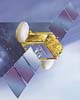
The successful launch Thursday of India's heaviest satellite from spaceport of Kourou in French Guyana may have boosted the country's space research efforts to yet another level, but it has also lifted the spirits of at least three Direct-To-Home televisions broadcasters, one of which has been waiting for years to launch its services in India. |
|
|

|
|
|
|
|
|
|
|
|
|
|
|
| The content herein, unless otherwise known to be public domain, are Copyright 1995-2006 - SpaceDaily.AFP and UPI Wire Stories are copyright Agence France-Presse and United Press International. ESA PortalReports are copyright European Space Agency. All NASA sourced material is public domain. Additionalcopyrights may apply in whole or part to other bona fide parties. Advertising does not imply endorsement,agreement or approval of any opinions, statements or information provided by SpaceDaily on any Web page published or hosted by SpaceDaily. Privacy Statement |

