
 |
 |
 |
 |
 |
 |
 |
 |
 |

 |
NATO denies Afghan troop buildup, urges Pakistan action
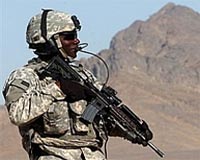
Brussels (AFP) July 16, 2008 The NATO military alliance denied Wednesday that it was massing troops on the Afghan side of the border with Pakistan but urged Islamabad to do more to stop Taliban militants taking refuge. "There is not, nor is there going to be, an incursion of NATO troops into Pakistan. There is no planning for that, there is no mandate for that, and there is no troop movement in that direction," a spokesman said in Brussels. Pakistani tribal elders raised the alarm Tuesday over what they said was a build-up of hundreds of NATO-led troops on the Afghan side of the border. It came as Islamabad was under growing pressure from the United States to curb cross-border attacks by Taliban militants, with the US military chief flying into Pakistan at the weekend for urgent talks. Reports said some 300 NATO soldiers equipped with tanks, armoured vehicles and heavy weaponry had been moved very close to Lwara Mundi, a border village in North Waziristan. "There is no unusual military activity in that region," said the NATO spokesman, James Appathurai. While he insisted that the NATO-led International Security Assistance Force (ISAF) was not gathering at the border, he underlined that they did have permission to shoot into Pakistan if fired upon. "They have the right to fire back if they are fired upon, and there should be no doubt that they do it," he said. ISAF, made up of some 53,000 troops drawn from around 40 nations, is trying to spread the influence of the weak centralised Afghan government across the country, but it is struggling to end a Taliban-led insurgency. The task has been made more difficult by the fact that the Taliban, backed by al-Qaeda fighters and drug runners, has been using the lawless areas in Pakistan near the border as a rear base. "There is not enough pressure on militants in the frontier provinces in Pakistan and as a result they are using these areas as safe havens in which to rest, reconstitute and then launch attacks into Afghanistan," Appathurai said. "That is a concern for us," he said.
related report A convoy had come under heavy attack from several houses during a routine patrol on Tuesday in the volatile Bakwa district of the southwestern province of Farah, the coalition said in a statement. "The coalition convoy returned fire and called for close air support on the enemy positions. A house was hit; eight civilians were killed, two others injured," it said. The deputy provincial governor Mohammad Younus Rasouli told AFP that a civilian house had been struck in the raid. "Information from the area is that 12 civilians have been killed: nine women, two men and a boy," he said. He said the international forces had been targeting "a large number" of Taliban from neighbouring Pakistan who had recently entered the area. The coalition said it never intentionally targeted non-combatants and "deeply regret" any time civilians become casualties in action against insurgents. The coalition and separate NATO-led International Security Assistance Force are also investigating official Afghan reports that 64 civilians were killed in two strikes in northeastern Afghanistan early this month. Civilians are regularly caught in the crossfire of an insurgency launched after the hardline Islamic Taliban regime was removed from power in late 2001 in a US-led invasion. Most are killed in rebel attacks but dozens have also been killed in military action this year. Community Email This Article Comment On This Article Share This Article With Planet Earth
Related Links News From Across The Stans
 Walker's World: Turk gray wolves prowl
 Toulouse, France (UPI) Jul 16, 2008
 It was not easy to see in the glare of the cameras and the fierce Riviera sunlight. But as French President Nicolas Sarkozy launched his grandiose new Mediterranean Union project this week, the shadow of a gray wolf loomed menacingly offstage. |
|
|

| The content herein, unless otherwise known to be public domain, are Copyright 1995-2007 - SpaceDaily.AFP and UPI Wire Stories are copyright Agence France-Presse and United Press International. ESA Portal Reports are copyright European Space Agency. All NASA sourced material is public domain. Additional copyrights may apply in whole or part to other bona fide parties. Advertising does not imply endorsement,agreement or approval of any opinions, statements or information provided by SpaceDaily on any Web page published or hosted by SpaceDaily. Privacy Statement |
 del.icio.us
 Digg
Digg Reddit
 YahooMyWeb
 Google
 Facebook