
 |
 |
 |
 |
 |
 |
 |
 |
 |

 |
NASA shuttle to take last flight in May 2010
Washington (AFP) July 8, 2008 The final flight in NASA's space shuttle program will take off on May 31, 2010, four months before the fleet is retired after 30 years of service, the agency said Tuesday. The last mission is one of 10 flights that NASA has planned for Endeavour, Discovery and Atlantis before they are taken out of service in September 2010. Two of these are planned for this year -- on October 8, Atlantis heads on a service mission to the Hubble Space Telescope, and on November 10, Endeavour will deliver supplies and service parts to the International Space Station. Another five flights are scheduled for 2009 and three for 2010, said NASA spokesman Rob Navias. Endeavour will take off for the ISS on May 31, 2010, for the final flight of the shuttle program, which began with the launch of Columbia from the Kennedy Space Center at Cape Canaveral in Florida on April 12, 1981. It will carry critical spare components, including two S-band communication antennas, a high-pressure gas tank and spare parts for the mechanical maintenance robot named Dexter that has been installed outside the station. "The approved target dates are subject to change based on processing and other launch vehicle schedules," NASA said in a statement. "They reflect the agency's commitment to complete assembly of the (space) station and to retire the shuttle fleet as transition continues to the new launch vehicles, including Ares and Orion." Once the shuttles are out of service, NASA will focus on a new type of space vehicle similar in shape but significantly larger than the Apollo spacecraft, launched by rocket and intended to carry manned missions to the moon and Mars. The Orion capsule has been named after the brightest and most recognizable star in the sky, and its launch vehicle, the rocket Ares, takes its name from the Greek god who is associated with Roman warrior god Mars. Orion's first manned mission is planned by 2014 at the latest while its first trip to the moon is hoped to take place by at least 2020. The space shuttle is a complex and fragile feat of engineering, made up of more than two million parts and comprising an airplane-like orbiter that can accommodate three astronauts in the cock-pit and five others on deck. It also has a huge 18-meter by 4.6-meter (59-foot by 15-foot) storage area for transporting freight. The only spacecraft with the room to carry ISS parts, the shuttle was key to the construction of the station when it began in 1998. Six shuttles were originally built: Enterprise, a demonstration model that never made it into space, then Columbia, Challenger, Discovery, Atlantis and Endeavour. Two of these never returned to Earth. Challenger exploded shortly after its launch on January 28, 1986, and Columbia was destroyed on its re-entry into the atmosphere on February 1, 2003. Each shuttle was carrying seven astronauts, all of whom died. The Columbia disaster temporarily put a halt to NASA's shuttle missions to the ISS -- they did not resume until July 2005. In the meantime, only the Russians sent astronauts into space on their Soyouz spacecraft. The shuttle is the first spacecraft intended for multiple use, and by the time they are taken out of service, Endeavour will have carried out 25 missions, Atlantis 32 and Discovery 38. About 35 missions will have been sent to the ISS, the largest structure ever created by man in space and a key step towards conquering Mars. Community Email This Article Comment On This Article Share This Article With Planet Earth
Related Links Shuttle at NASA Watch NASA TV via Space.TV Space Shuttle News at Space-Travel.Com
 Disaster plan in place for Hubble mission
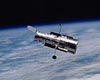 Houston (UPI) Jun 17, 2008
 U.S. space officials said a second shuttle will rescue the crew of the shuttle Atlantis if an emergency arises on Hubble repair mission STS-125. |
|
|

| The content herein, unless otherwise known to be public domain, are Copyright 1995-2007 - SpaceDaily.AFP and UPI Wire Stories are copyright Agence France-Presse and United Press International. ESA Portal Reports are copyright European Space Agency. All NASA sourced material is public domain. Additional copyrights may apply in whole or part to other bona fide parties. Advertising does not imply endorsement,agreement or approval of any opinions, statements or information provided by SpaceDaily on any Web page published or hosted by SpaceDaily. Privacy Statement |
 del.icio.us
 Digg
Digg Reddit
 YahooMyWeb
 Google
 Facebook