|
 |
 |
 |
 |
 |
 |
 |
 |

 |
NASA selects Landsat spacecraft contractor
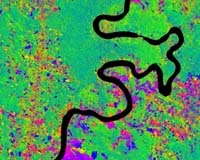
Washington, April 23, 2008 The U.S. space agency says it's selected General Dynamics Advanced Information Systems Inc. to build the Landsat Data Continuity Mission spacecraft. The $116 million National Aeronautics and Space Administration contract makes the company responsible for the design and fabrication of the LDCM spacecraft, integration of government furnished instruments, satellite-level testing, on-orbit satellite check-out and continuing on-orbit engineering support. The company also will provide a spacecraft-observatory simulator, NASA said. LDCM is a component of the Landsat Program conducted jointly by NASA and the U.S. Geological Survey, with NASA providing the spacecraft, instruments, launch vehicle and the mission operations element of the ground system. The USGS will provide the mission operations center, ground processing systems and the flight operations team. With a five-year design lifetime, the LDCM satellite will continue the series of measurements begun with the Landsat-1 mission in 1972 for the collection, archiving and distribution of multi-spectral imagery of the Earth's land surfaces to detect natural and human-induced changes. NASA said the LDCM is a follow-on mission to the Landsat series of missions that have provided data that constitute the longest continuous record of the Earth's surface as seen from space. Community Email This Article Comment On This Article Related Links Earth Observation News - Suppiliers, Technology and Application
 Mars Technology On Board A Balloon To Study The Earth's Atmosphere
 Kiruna, Sweden (SPX) Apr 22, 2008
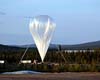
"From Mars to the Earth and back" is the theme when the Swedish Institute of Space Physics (IRF), the Swedish Space Corporation (SSC) and University of Bern in Switzerland build and launch a mass spectrometer on a stratospheric balloon from SSC's operational facility Esrange Space Center in Kiruna. |
|
|

| The content herein, unless otherwise known to be public domain, are Copyright 1995-2007 - SpaceDaily.AFP and UPI Wire Stories are copyright Agence France-Presse and United Press International. ESA Portal Reports are copyright European Space Agency. All NASA sourced material is public domain. Additional copyrights may apply in whole or part to other bona fide parties. Advertising does not imply endorsement,agreement or approval of any opinions, statements or information provided by SpaceDaily on any Web page published or hosted by SpaceDaily. Privacy Statement |