|
 |
 |
 |
 |
 |
 |
 |
 |

 |
NASA and Stanford Form Biocomputing Collaboration
Moffett Field - Oct 16, 2001 Under a powerful new partnership agreement, joint research efforts at NASA and Stanford will benefit from computational technologies that have led to recent breakthroughs, such as understanding the genetic basis of diseases. NASA's Center for Computational Astrobiology and Fundamental Biology (NCCAFB), based at NASA's Ames Research Center, and Stanford's Center for Biomedical Computation (CBMC), today announced a collaborative partnership to conduct multi-disciplinary research and development in the emerging field of computational biology. The goal of the collaboration is to develop new methods of computational biology and apply them to explain how cells function, evolve and are affected by diseases, both on Earth and in space. Computational biology is an emerging interdisciplinary field that uses computers and specialized software to solve biological problems and apply the solutions to diverse applications in biology, medicine and space science. "This collaboration will greatly enhance NASA's research process in astrobiology and the related field of space genetics," said Dr. Andrew Pohorille, director of the NCCAFB at Ames Research Center in the Silicon Valley. "It is a unique partnership because we will use new computational methods developed at Stanford and at Ames to interpret the data both from Stanford's laboratory experiments and from experiments in space." One early collaboration will be applying the tools of biomedical computing to NASA's space genetics program, said Pohorille. Space genetics aims to characterize the structural, genetic and protein 'footprints' (or signatures) inside cells, tissues and organisms in space. NASA will first test human kidney cells flown on the International Space Station. Unlike conventional cells grown in laboratories on Earth, kidney cells flown in space closely mimic how cells actually interact inside a human body. Good tissue models will greatly aid researchers in finding cures for kidney diseases. - The collaboration also is unique because it will employ NASA's state-of-the-art supercomputers, taking advantage of Ames' role as NASA's lead center in information technology. The NCCAFB currently uses nearly 4,000 processors on SGI supercomputers at the NASA Advanced Supercomputing Division at Ames. "We are excited that this joint effort will exploit our mutual synergies and accelerate progress in the vital new area of computational biology," said Dr. Russ B. Altman, director of the CBMC at Stanford. Stanford initially intends to focus on three projects: the integration of diverse databases, the simulation of physical models and the development of methods for smoothly moving between images and their corresponding physical models. "These projects are part of a grant we received in October from the National Institutes of Health (NIH) that will kick-start the Center and prepare Stanford for a larger set of projects in the future," Altman said. Computational biology has become indispensable in modern biology because it lets scientists gather, store and analyze vast amounts of data obtained from gene sequencing, the use of micro-arrays and the study of proteins and cell physiology. Computational biology has already led to breakthroughs in identifying and testing for genetic diseases, for example. Initial collaborative research will focus on cell metabolism, using both healthy and diseased cells cultured from experiments on Earth and in space. In addition, the partnership will develop new information management tools to use on NCCAFB's massively parallel computers. "This is just the first step," Pohorille said. "The grand vision of the partnership is to create a nucleus for a broad, regional partnership that will eventually include academia, national laboratories and industry." The Center for Biomedical Computation at Stanford is comprised of faculty who coordinate the university's long-term biomedical computation strategy and design coursework for students. The Center uses a Silicon Graphics Origin 3800-class computer, currently the most powerful system in the world dedicated to biomedical research. The Center is hosting its second annual research symposium Saturday, Oct. 20 at Stanford. More information The NASA Center for Computational Astrobiology and Fundamental Biology was formed in 1999 to advance the agency's scientific goals in astrobiology and fundamental biology. The NCCAFB leverages Ames' role as NASA's lead center for astrobiology, the study of life in the universe. The directors of CBMC and NCCAFB will remain at their current institutions. A steering committee comprised of scientists from both centers will provide leadership and implement the collaboration. Community Email This Article Comment On This Article Related Links CBMC NCCAFB NASA's Office of Biological and Physical Research Search SpaceDaily Subscribe To SpaceDaily Express Space Technology News - Applications and Research
 Industry Team Achieve New Communications Technology With AESA Radars
 Baltimore MD (SPX) Jan 12, 2006
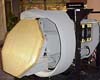
A team comprised of three leading US aerospace and defense contractors has demonstrated an innovative technological use of active electronically scanned array (AESA) radars for high-bandwidth communications. |
|
|

|
|
|
|
|
|
|
|
|
|
|
|
| The content herein, unless otherwise known to be public domain, are Copyright 1995-2006 - SpaceDaily.AFP and UPI Wire Stories are copyright Agence France-Presse and United Press International. ESA PortalReports are copyright European Space Agency. All NASA sourced material is public domain. Additionalcopyrights may apply in whole or part to other bona fide parties. Advertising does not imply endorsement,agreement or approval of any opinions, statements or information provided by SpaceDaily on any Web page published or hosted by SpaceDaily. Privacy Statement |