|
 |
 |
 |
 |
 |
 |
 |
 |

 |
NASA To Study Lightning Storms Using High-Flying UAVs
Huntsville - July 23, 2002 To better understand both the causes of an electrical storm's fury and its effects on our home planet, NASA and university research scientists will use a tool no atmospheric scientist has ever used to study lightning -- an unmanned aerial vehicle. The research is part of the Altus Cumulus Electrification Study (ACES), a collaboration among NASA's Marshall Space Flight Center, Huntsville, Ala.; the University of Alabama at Huntsville; NASA's Goddard Space Flight Center, Greenbelt, Md.; Penn State University, University Park; and General Atomics Aeronautical Systems, Inc., San Diego. Based at the Naval Air Station Key West in Florida, researchers in August will chase down thunderstorms using an unmanned aerial vehicle, or "UAV" - allowing them to achieve dual goals of gathering weather data safely and testing new aircraft technology. This is expected to mark the first time a UAV is used to conduct lightning research. "What we learn has the potential to help forecasters improve weather prediction, especially for storms that may produce severe weather," said the study's principal investigator, Dr. Richard Blakeslee, a NASA atmospheric scientist at the Global Hydrology and Climate Center in Huntsville. "Also, by learning more about these individual storms, we hope to better understand weather on a global scale. "Using the aerial vehicle, we will make electric, magnetic and optical measurements of the thunderstorms, gauging elements such as lightning activity and the electrical environment in and around the storms," explained Blakeslee. "At the same time, ground-based radar and satellite observations will provide detailed information on the cloud properties and storm severity." This ground- and satellite-based data will include details on lightning flash rate, amount of precipitation and speed of updraft - providing a comprehensive view of the storm from the ground, as well as from the sky. By learning more about individual storms, scientists hope to better understand the global water and energy cycle as well as climate variability. The study also will provide federal, state and local governments with new disaster-management information for use during severe storms, floods and wildfires. In the process, researchers will learn more about UAV aircraft and how they can be used for future research missions. "The UAV is an exciting new technology," said Blakeslee. "By getting this close to storms, we're demonstrating the promise of using unmanned aerial vehicles for meteorological applications." "The mission will utilize the Altus UAV -- built by General Atomics Aeronautical Systems - chosen for its slow flight speed of 70 to 100 knots (80 to 115 mph), long endurance, and high-altitude flight (up to 55,000 feet)," said ACES project manager Tony Kim of Marshall Space Flight Center. "The Altus boasts a wing span of 55 feet." These qualities give the Altus aircraft the ability to fly near thunderstorms for long periods of time, allowing investigations to be conducted over the entire life cycle of storms. The Altus overcomes the limitations of conventional aircraft that, because of their greater speed, provide only brief snapshots of storm activity sandwiched between long periods of no observations. As part of NASA's Unmanned Aerial Vehicle-based, science demonstration program, these flights also will demonstrate this aircraft's ability to carry Earth-viewing scientific payloads into environments where pilots would be exposed to potentially life-threatening hazards. "In the summer, Florida is the best location in the United States to study thunderstorms because the large number of storms that occur there should provide frequent opportunities to observe them," said Blakeslee. The mission is part of NASA's Earth Science Enterprise, a long-term research effort designed to help us better understand and protect our home planet, while inspiring the next generation of explorers. The Global Hydrology and Climate Center is one of seven science research centers at the National Space Science and Technology Center (NSSTC). The NSSTC is a partnership with the Marshall Center, Alabama universities, industry and federal agencies. It enables scientists, engineers and educators to share research and facilities, focusing on space science, Earth sciences, materials science, biotechnology, propulsion, information technology and optics. CommunityEmail This Article Comment On This Article Related Links National Space Science and Technology Center SpaceDaily Search SpaceDaily Subscribe To SpaceDaily Express Dirt, rocks and all the stuff we stand on firmly
 Magnetic Reconnection Region Larger Than 2.5 Million Km Found In The Solar Wind
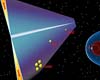 Paris (ESA) Jan 12, 2006
Using the ESA Cluster spacecraft and the NASA Wind and ACE satellites, a team of American and European scientists have discovered the largest jets of particles created between the Earth and the Sun by magnetic reconnection. This result makes the cover of this week's issue of Nature. |
|
|

| The content herein, unless otherwise known to be public domain, are Copyright 1995-2006 - SpaceDaily.AFP and UPI Wire Stories are copyright Agence France-Presse and United Press International. ESA PortalReports are copyright European Space Agency. All NASA sourced material is public domain. Additionalcopyrights may apply in whole or part to other bona fide parties. Advertising does not imply endorsement,agreement or approval of any opinions, statements or information provided by SpaceDaily on any Web page published or hosted by SpaceDaily. Privacy Statement |