|
 |
 |
 |
 |
 |
 |
 |
 |

 |
NASA Study Finds Tiny Particles In Air May Influence Carbon Sinks
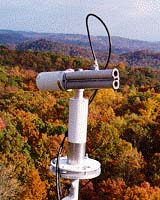
Greenbelt MD (SPX) Dec 17, 2004 A NASA-funded study provides direct measurements confirming aerosols, tiny particles in the atmosphere, may be changing how much carbon plants and ecosystems absorb from or release to the air. The research is important for understanding climate change and the various factors that influence how much carbon gets transferred from the air into belowground carbon sinks. Carbon dioxide acts as a heat-trapping greenhouse gas in the atmosphere. The study reported that the effects of aerosols on overall carbon exchange might be more significant than clouds. Cloud cover tended to reflect the sun's radiation back out to space, reducing the overall amount of light to Earth's surface. As a result, less sunlight on plants caused less photosynthesis to occur. The study, which benefited from NASA satellite data, focused on six sites around the country. The sites represented a wide variety of landscapes, including forests, crops, and grassland. When aerosol levels were high, the amount of carbon absorbed by an ecosystem increased for forest and croplands, and decreased for grasslands. The study appeared in a recent issue of Geophysical Research Letters. Lead author Dev Niyogi, a research assistant professor at North Carolina State University, Raleigh, N.C., and colleagues, suggested the effect of aerosols on the overall exchange of carbon dioxide by ecosystems may be greater than the effects of clouds on these processes. "We were very excited to find direct observational evidence that one variable, the amount of aerosols in the atmosphere, can have such a significant effect on something so complex as an ecosystem's carbon exchange," Niyogi said. The researchers used data from NASA's AERONET (AErosol RObotic NETwork) and the AmeriFlux network. AERONET provided data on the amount of aerosols in the air. From AmeriFlux, Niyogi and colleagues were able to measure the exchange of CO2 between the air and an ecosystem. But aerosols did not dramatically cut the amount of radiation that reached Earth's surface. Instead, aerosols scattered sunlight allowing more radiation to penetrate to the lower layers of leaves. This less concentrated radiation due to aerosols allowed for more leaves to photosynthesize at a higher rate. During photosynthesis, plants absorb carbon from the air. In grasslands the top layers of leaves are not as dense as with crops and forests, causing the ground to heat more. When the ground heats, the soil gives more off CO2, thus reducing the net effect. The study also benefited from the Moderate Resolution Imaging Spectroradiometer (MODIS) in NASA's Terra satellite, which was used at regular intervals to provide broader geophysical context to the more continuous data available from AERONET. MODIS data were also used to assess the vegetation health and map leaf area for each site, and to interpret the net ecosystem exchange. For each site, the researchers analyzed how carbon cycled in each ecosystem on cloudy and cloud-free days. They examined carbon exchange levels for high and low levels of scattered sunlight as well as high and low levels of aerosols. Measurements were taken during afternoons in the peak growing season from June through August. Years of available data varied for each site. AERONET is a ground-based aerosol monitoring network and data archive initiated and supported by NASA's Earth Observing System and expanded as a consortium, with many non-NASA institutions. At present, NASA provides equipment and standardization to institutions that participate in the program. Data from AERONET provides near real-time observations of aerosols. Data from this collaboration provides near real-time observations of aerosols. AmeriFlux is a multi-institutional network supported by several federal agencies that provides ongoing data of ecosystem level exchanges of CO2, water, energy and other factors on daily to yearly time scales. Community Email This Article Comment On This Article Related Links North Carolina State University NASA's AERONET SpaceDaily Search SpaceDaily Subscribe To SpaceDaily Express Earth Observation News - Suppiliers, Technology and Application
 New Legislation Initiated To Support Commercial Remote Sensing Industry
 New York NY (SPX) Jan 11, 2006
The importance of remotely sensed data and technologies to support natural disasters has prompted attention and action in Washington. New initiatives and legislation authorizing appropriations to the remote sensing industry will be discussed at Strategic Research Institute's U.S. Commercial Remote Sensing Industry conference, scheduled for February 9-10, 2006 in Washington D.C. |
|
|

| The content herein, unless otherwise known to be public domain, are Copyright 1995-2006 - SpaceDaily.AFP and UPI Wire Stories are copyright Agence France-Presse and United Press International. ESA PortalReports are copyright European Space Agency. All NASA sourced material is public domain. Additionalcopyrights may apply in whole or part to other bona fide parties. Advertising does not imply endorsement,agreement or approval of any opinions, statements or information provided by SpaceDaily on any Web page published or hosted by SpaceDaily. Privacy Statement |