|
 |
 |
 |
 |
 |
 |
 |
 |

 |
NASA Study Finds Soot May Be Changing The Arctic Environment
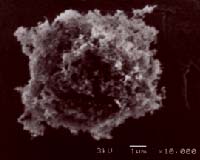
Greenbelt MD (SPX) Mar 24, 2005 NASA continues to explore the impact of black carbon or soot on the Earth's climate. NASA uses satellite data and computer models that recreate the climate. New findings show soot may be contributing to changes happening near the North Pole, such as accelerating melting of sea ice and snow, and changing atmospheric temperatures. Dorothy Koch of Columbia University, New York, and NASA's Goddard Institute for Space Studies (GISS), New York, and James Hansen of NASA GISS are co-authors of the study that appeared in a recent issue of the Journal of Geophysical Research. "This research offers additional evidence black carbon, generated through the process of incomplete combustion, may have a significant warming impact on the Arctic," Koch said. "Further, it means there may be immediate consequences for Arctic ecosystems, and potentially long-term implications on climate patterns for much of the globe," she added. The Arctic is especially susceptible to the impact of human-generated particles and other pollution. In recent years the Arctic has significantly warmed, and sea-ice cover and glacial snow have diminished. Likely causes for these trends include changing weather patterns and the effects of pollution. Black carbon has been implicated as playing a role in melting ice and snow. When soot falls on ice, it darkens the surface and accelerates melting by increasing absorbed sunlight. Airborne soot also warms the air and affects weather patterns and clouds. Koch and Hansen's results suggest a possible mechanism behind the satellite-derived observations of Arctic climate change. They found the timing and location of Arctic warming and sea ice loss in the late 20th century are consistent with a significant contribution from man-made tiny particles of pollution, or aerosols. Koch and Hansen used GISS' General Circulation Model (GCM) to investigate the origins of Arctic soot by isolating various source regions and types. The GCM employs a lot of different data gathered by NASA and other U.S. satellites to study many environmental factors such as ice cover and temperature. The research found in the atmosphere over the Arctic, about one-third of the soot comes from South Asia, one-third from burning biomass or vegetation around the world, and the remainder from Russia, Europe and North America. South Asia is estimated to have the largest industrial soot emissions in the world, and the meteorology in that region readily lofts pollution into the upper atmosphere where it is transported to the North Pole. Meanwhile, the pollution from Europe and Russia travels closer to the surface. This study demonstrates the GCMs accurately represent the long-range transport of pollutants, such as those from Southern Asia to the Arctic, that were observed from aircraft. During the early 1980s the primary sources of Arctic particulate pollution are believed to have been from Russia and Europe. Those sources have decreased substantially in the past two decades, but the computer simulations indicate increasing emissions from South Asia have made up for some of the reduced Eurasian pollution. Koch and Hansen suggest Southern Asia also makes the greatest contribution to soot deposited on Greenland. NASA sponsored efforts using satellite data and models to assess polar feedbacks constitute an important contribution to the U.S. Climate Change Science Program. By exploring processes in the Earth's atmosphere, NASA scientists are seeking answers to how pollutants like soot are changing the climate of the world around us. Community Email This Article Comment On This Article Related Links SpaceDaily Search SpaceDaily Subscribe To SpaceDaily Express Climate Science News - Modeling, Mitigation Adaptation
 The Forgotten Methane Source
 Heidelberg, Germany (SPX) Jan 11, 2006
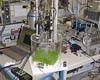
In the last few years, more and more research has focused on the biosphere; particularly, on how gases which influence the climate are exchanged between the biosphere and atmosphere. Researchers from the Max Planck Institute for Nuclear Physics have now carefully analysed which organic gases are emitted from plants. |
|
|

| The content herein, unless otherwise known to be public domain, are Copyright 1995-2006 - SpaceDaily.AFP and UPI Wire Stories are copyright Agence France-Presse and United Press International. ESA PortalReports are copyright European Space Agency. All NASA sourced material is public domain. Additionalcopyrights may apply in whole or part to other bona fide parties. Advertising does not imply endorsement,agreement or approval of any opinions, statements or information provided by SpaceDaily on any Web page published or hosted by SpaceDaily. Privacy Statement |