|
 |
 |
 |
 |
 |
 |
 |
 |

 |
NASA Spacecraft Locks The Vault On Its Sapphire, Diamond Payload
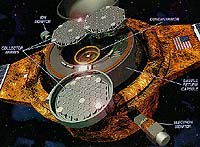
Pasadena - Apr 06, 2004 Since October 2001 NASA's Genesis spacecraft has exposed specially designed, collector arrays of sapphire, silicon, gold and diamond to the sun's solar wind. That collection of pristine particles of the sun came to an end last week, when NASA's Genesis team at the Jet Propulsion Laboratory in Pasadena, Calif., ordered the spacecraft's collectors deactivated and stowed. The closeout process was completed when Genesis closed and sealed the spacecraft's sample-return capsule. "This is a momentous step," said Genesis project manager Don Sweetnam. "We have concluded the solar-wind collection phase of the mission. Now we are focusing on returning to Earth, this Septembe, NASA's first samples from space since Apollo 17 back in December 1972," he said. NASA's Genesis mission was launched in August 2001 from the Cape Canaveral Air Force Station, Fla. Three months and about one million miles later, the spacecraft began to amass solar wind particles on hexagonal wafer-shaped collectors made of pure silicon, gold, sapphire and diamond. "The material our collector arrays are made of may sound exotic, but what is really unique about Genesis is what we collected on them," said mission principal investigator Don Burnett. "With Genesis we have almost 27 months far beyond the moon's orbit collecting atoms from the sun. With data from this mission, we should be able to say what the sun is composed of at a level of precision for planetary science purposes that has never been seen before." To get Genesis' precious cargo into the sterilized-gloved hands of Burnett and solar scientists around the world is an exotic endeavor in itself. Later this month, Genesis will execute the first in a series of trajectory maneuvers that will place the spacecraft on a route toward Earth. On Sept. 8, 2004, the spacecraft will dispatch a sample-return capsule containing its solar booty. The capsule will re-enter Earth's atmosphere for a planned landing at the U.S. Air Force Utah Test and Training Range at about 9:15 a.m. EDT. To preserve the delicate particles of the sun in their prisons of gold, sapphire and diamond, specially trained helicopter pilots will snag the return capsule from mid-air using giant hooks. The flight crews for the two helicopters assigned for the capture and return of Genesis are former military aviators, Hollywood stunt pilots and an active-duty Air Force test pilot. Community Email This Article Comment On This Article Related Links Genesis at JPL SpaceDaily Search SpaceDaily Subscribe To SpaceDaily Express Space
 Satellite Launch To Boost DTH In India
 Calcutta, India (SPX) Dec 28, 2005
The successful launch Thursday of India's heaviest satellite from spaceport of Kourou in French Guyana may have boosted the country's space research efforts to yet another level, but it has also lifted the spirits of at least three Direct-To-Home televisions broadcasters, one of which has been waiting for years to launch its services in India. |
|
|

| The content herein, unless otherwise known to be public domain, are Copyright 1995-2006 - SpaceDaily.AFP and UPI Wire Stories are copyright Agence France-Presse and United Press International. ESA PortalReports are copyright European Space Agency. All NASA sourced material is public domain. Additionalcopyrights may apply in whole or part to other bona fide parties. Advertising does not imply endorsement,agreement or approval of any opinions, statements or information provided by SpaceDaily on any Web page published or hosted by SpaceDaily. Privacy Statement |