|
 |
 |
 |
 |
 |
 |
 |
 |

 |
NASA Shuttle Tank Factory Facing Catastrophic Ruin From Katrina
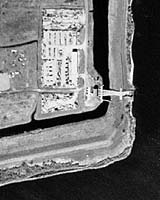
New Orleans, Louisiana (SPX) Aug 28, 2005 NASA has had some close calls from hurricanes before. Its huge launch facilities at Cape Canaveral have suffered moderate damage on several occasions. And each time, observers of the US space program have speculated what would happen if a major hurricane struck the Cape and destroyed the Vehicle Assembly Building, - the irreplaceable heart of Shuttle launch operations. Now it seems that the killing blow may occur hundreds of miles to the west, at the Michoud Assembly Facility near New Orleans where the Space Shuttle's external propellant tanks are manufactured. Hurricane Katrina is now heading almost directly toward this vital installation. Michoud itself, is located alongside a deep-water canal, directly west of Lake Borgne at the apex of a swampy triangle bounded by high ground. This natural funnel will face directly into the wind as Hurricane Katrina approaches Louisiana. The factory site is below sea level and a pumping station is needed to keep it dry even under normal conditions. The storm surge is predicted to be at least 28' high, and the top of the Michoud factory levee is less than 20' above sea level. The levee will be of little use in keeping the rising water out, but it will hold the water in after the tide goes down. The main factory building dates back to World War II and probably won't stand up very well to 160mph winds. It seems that only a major weakening or track change by the hurricane can save Michoud from a serious beating. Because of the stand-down in Shuttle operations since February 2003, there are now seven complete External Tanks stored at Michoud (plus components for 8-10 more). All of these tanks may well be destroyed or seriously damaged. There are two Shuttle tanks still safely at KSC, but they were supposed to be barged back to Michoud for modifications that cannot be made at the Cape. One of these tanks was scheduled to be returned to KSC by November 12 for the slated March Shuttle launch (dubbed "RTF-3" by some). Significant damage at Michoud could wreck this schedule and delay the resumption of Space Station assembly flights, already on hold for 3.5 years. Support for continued Shuttle operations declines with every delay and disaster. It seems possible that Katrina could be the straw that finally breaks the camel's back. And after Shuttle, NASA Administrator Mike Griffin apparently plans to use the Michoud facility to build modified Shuttle ETs which will serve as the core of his new heavy-lift booster. If Michoud is destroyed, what becomes of this plan? Historically, when major government facilities are wrecked by hurricanes, local politicians obtain bales of federal money to rebuild them. Florida's Holmstead Air Force Base and Pensacola Naval Air Station were rebuilt even as their parent services were contracting and discarding bases elsewhere. But at Michoud, lots of skeptics will ask whether this is a wise expenditure of resources. The US has surplus capacity in the space booster industry and the two major private booster builders are talking about consolidating their production into a single factory. If the existing tooling for Shuttle tanks needs to be rebuilt, much of the alleged savings gained by adopting a Shuttle-derived design will evaporate. The partisans of an EELV-based or clean-sheet HLV design will come out of the woodwork again. It would be ironic if the design of the booster that returns men to the moon were to be determined by the track of a hurricane. Community Email This Article Comment On This Article Related Links NASA Hurricane Watch Site SpaceDaily Search SpaceDaily Subscribe To SpaceDaily Express Space Shuttle News at Space-Travel.Com
 NASA's Soyuz Deal Will Not Scrap Shuttle
 Washington DC (SPX) Jan 11 2006
NASA's announcement last week that it will pay Roskosmos $43.8 million to transport one astronaut to and another one from the International Space Station this year represents the agency's acknowledgment that it has no immediate alternative if it wishes to continue its presence and participation in the orbiting facility. |
|
|

| The content herein, unless otherwise known to be public domain, are Copyright 1995-2006 - SpaceDaily.AFP and UPI Wire Stories are copyright Agence France-Presse and United Press International. ESA PortalReports are copyright European Space Agency. All NASA sourced material is public domain. Additionalcopyrights may apply in whole or part to other bona fide parties. Advertising does not imply endorsement,agreement or approval of any opinions, statements or information provided by SpaceDaily on any Web page published or hosted by SpaceDaily. Privacy Statement |