|
 |
 |
 |
 |
 |
 |
 |
 |

 |
NASA Sets Sights On Lunar Dust Exploration Mission
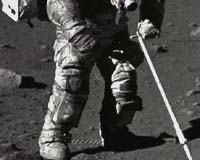
Washington DC (SPX) Apr 10, 2008 NASA is preparing to send a small spacecraft to the moon in 2011 to assess the lunar atmosphere and the nature of dust lofted above the surface. Called the Lunar Atmosphere and Dust Environment Explorer (LADEE), the mission will launch before the agency's moon exploration activities accelerate during the next decade. LADEE will gather detailed information about conditions near the surface and environmental influences on lunar dust. A thorough understanding of these influences will help researchers understand how future exploration may shape the lunar environment and how the environment may affect future explorers. "LADEE represents a low-cost approach to science missions, enabling faster science return and more frequent missions," said Ames Director S. Pete Worden. "These measurements will provide scientific insight into the lunar environment, and give our explorers a clearer understanding of what they'll be up against as they set up the first outpost and begin the process of settling the solar system." LADEE is a cooperative effort with NASA's Ames Research Center at Moffett Field, Calif., Goddard Space Flight Center in Greenbelt, Md., and Marshall Space Flight Center in Huntsville, Ala. The total cost of the spacecraft is expected to be approximately $80 million. Ames will manage the mission, build the spacecraft and perform mission operations. Goddard will perform environmental testing and launch vehicle integration. The mission will be established within Marshall's newly created Lunar Science Program Office. Marshall will draw upon experience gained from managing a larger suite of low-cost, small satellite missions through NASA's Discovery and New Frontiers Program. LADEE will fly to the moon as a secondary payload on the Discovery mission called Gravity Recovery and Interior Laboratory (GRAIL), which is designed to take ultra-precise gravity field measurements of the moon. Current plans call for the GRAIL and LADEE spacecraft to launch together on a Delta II rocket and separate after they are on a lunar trajectory. LADEE will take approximately four months to travel to the moon, then undergo a month-long checkout phase and begin 100 days of science operations. LADEE is one of many activities to support lunar exploration planned by NASA's Science Mission Directorate in Washington. Last year, NASA also established a lunar science institute at Ames. Research teams will address current topics in basic lunar science and possible astronomical, solar and Earth science investigations that could be performed from the moon. In addition, NASA is preparing for scientific investigations following the planned launch later this year of the Lunar Reconnaissance Orbiter (LRO). After a 30-year hiatus, LRO represents NASA's first step toward returning humans to the moon. Community Email This Article Comment On This Article Related Links NASA Mars News and Information at MarsDaily.com Lunar Dreams and more
 The 2008 Great Moonbuggy Race
 Huntsville AL (SPX) Apr 08, 2008
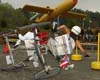
Not one of the participants in NASA's 2008 Great Moonbuggy Race was old enough to have seen the 1969 movie, Those Daring Young Men in Their Jaunty Jalopies. Nevertheless, the racers all looked like stars of that film as they careened about the simulated lunar terrain race course in a motley variety of strange vehicles. |
|
|

| The content herein, unless otherwise known to be public domain, are Copyright 1995-2007 - SpaceDaily.AFP and UPI Wire Stories are copyright Agence France-Presse and United Press International. ESA Portal Reports are copyright European Space Agency. All NASA sourced material is public domain. Additional copyrights may apply in whole or part to other bona fide parties. Advertising does not imply endorsement,agreement or approval of any opinions, statements or information provided by SpaceDaily on any Web page published or hosted by SpaceDaily. Privacy Statement |