
 |
 |
 |
 |
 |
 |
 |
 |
 |

 |

Greenbelt MD (SPX) Oct 25, 2010 A NASA panel that investigated the unsuccessful April 28 launch of a scientific balloon from Alice Springs, Australia, has released its report. NASA was attempting to launch the balloon carrying a gamma-ray telescope belonging to the University of California at Berkeley. The Nuclear Compton Telescope, which was partially destroyed in the accident, was designed to look for distant galaxies from a vantage point high in Earth's upper atmosphere. The scientific payload inadvertently separated from a mobile crane being used for the launch, and it was dragged approximately 150 yards by the airborne balloon. Spectators narrowly escaped injury when the payload hit an airport fence and a car. NASA's Mishap Investigation Board determined weather conditions were acceptable for launch, and there were no technical problems with the vehicle or the payload. The board was led by Michael L. Weiss of NASA's Goddard Space Flight Center in Greenbelt, Md. The board's report listed 25 proximate, intermediate and root causes related to insufficient risk analysis, contingency planning, personnel training, technical knowledge, government oversight and public safety accommodations. "There is no question in our minds that balloon launches are fragile processes," Weiss said. "The mishap board reviewed a large volume of information about the accident and conducted numerous interviews with eyewitnesses. But in the course of our investigation, we found surprisingly few documented procedures for balloon launches. No one considered the launch phase to be a potential hazard." The purpose of the investigation was to discover what caused the mishap and provide recommendations to help prevent similar future mishaps. The board listed 44 recommendations regarding the need for better communication; more robust range and ground safety plans and procedures; and better understanding of potentially unsafe conditions that can lead to accidents. Immediately after the accident in Australia, launch operations at all of NASA's balloon sites were suspended. NASA's Balloon Program Office will resume launches once it has implemented and verified new procedures to safeguard launch crews and the public. "We have learned a lot from this incident, and we'll have a better balloon program because of it," said Rob Strain, Goddard Space Flight Center director. The Columbia Scientific Balloon Facility in Palestine, Texas, conducts balloon launches for NASA under contract to the Balloon Program Office. The program office is based at NASA's Wallops Flight Facility in Virginia, which is managed by Goddard.
Share This Article With Planet Earth
Related Links - Aerospace News at SpaceMart.com

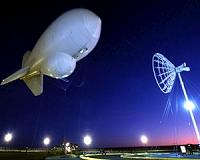 US Army Awards Lockheed Martin Contract For Additional PTDS Aerostat Systems
Akron OH (SPX) Jun 10, 2010 Lockheed Martin received a $142 million award from the U.S. Army to begin production of additional Persistent Threat Detection Systems (PTDS) to support coalition forces. The Department of Defense is making a concerted effort to rapidly increase the resources available to help warfighters detect improvised explosive devices (IEDs). PTDS is a tethered aerostat-based system, capable of stayi ... read more |
|
|
| The content herein, unless otherwise known to be public domain, are Copyright 1995-2010 - SpaceDaily. AFP and UPI Wire Stories are copyright Agence France-Presse and United Press International. ESA Portal Reports are copyright European Space Agency. All NASA sourced material is public domain. Additional copyrights may apply in whole or part to other bona fide parties. Advertising does not imply endorsement,agreement or approval of any opinions, statements or information provided by SpaceDaily on any Web page published or hosted by SpaceDaily. Privacy Statement |


 del.icio.us
 Digg
Digg Reddit
 YahooMyWeb
 Google
 Facebook


