|
 |
 |
 |
 |
 |
 |
 |
 |

 |
NASA Ready To Marshall Up More Paper Projects
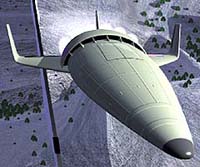
Huntsville - Jan 29, 2002 NASA�s Space Launch Initiative is seeking its second round of proposals on technologies, experiments and other risk-reduction activities from industry and academia-- taking another step toward making space launch safer and more affordable in the future. Technical proposals are due March 27. NASA expects to award multiple contracts totaling approximately $500 million in September. The Space Launch Initiative (SLI), also known as the Second Generation Reusable Launch Vehicle Program, is a NASA technology development program designed to substantially improve safety and reliability of space travel, while reducing costs. The program -- managed by NASA's Marshall Space Flight Center in Huntsville, Ala., and supported by NASA Centers across the country -- focuses on improving access to space for America�s 21st century missions by increasing safety and reliability and reducing costs associated with a new generation of fully reusable launch vehicles. "In spite of the advances in aerospace technology, human space flight remains a challenging endeavor," said Dennis Smith of the Marshall Center, manager of the Space Launch Initiative. "We are asking industry and universities to develop concepts and leap-ahead technologies needed to pioneer safer, lower cost space flight. They have a clean sheet of paper and the competition is wide-open." This second round of requests targets research on propulsion, flight demonstrations and NASA-unique projects such as life support and crew safety, and integrated ground testing and simulations for a second-generation reusable launch vehicle. Space Launch Initiative management has identified these areas as critical to the program and in need of additional research. The Space Launch Initiative�s first round of contract awards -- valued at $791 million -- went to 22 prime contractors. Those studies marked the first step of a process that will lead to development of a common set of alternative technologies that NASA will make available to all U.S. companies. These cutting-edge developments will be used for future government and commercial launch systems and space transportation operations. The Space Launch Initiative awarded an additional $94.6 million in December. "Proposals funded under this program will further define the technical requirements for achieving NASA's safety and mission goals," Smith said. "The proposals will initiate essential activities necessary to develop vehicles, ground support equipment and operations for a second generation reusable launch system." The original research announcement was issued in October 2000. NASA Research Announcement 8-30 Cycle I asked U.S. industry, educational institutions, nonprofit organizations and federal agencies to submit proposals in 10 areas: system engineering and architecture definition, airframe, vehicle subsystems, internal vehicle health monitoring, operations, upper stages, propulsion, flight mechanics, flight demonstrations and NASA-unique requirements such as life support and crew escape systems. The technology selected for development is based on extensive studies to assess the technological needs for a second-generation reusable launch vehicle. These technologies have been prioritized and the funding is commensurate with those priorities. The planned budget for the Space Launch Initiative totals $4.8 billion through fiscal year 2006. The Space Launch Initiative�s goal is to enable full-scale development of a reusable launch system in 2006 -- with flight operations anticipated in the 2012 timeframe. Community Email This Article Comment On This Article Related Links Space Launch Initiative SpaceDaily Search SpaceDaily Subscribe To SpaceDaily Express Rocket Science News at Space-Travel.Com
 Successful First Test For Vega's Zefiro 9 Engine
 Paris, France(ESA) Dec 28, 2005
Flames, smoke and a deafening noise accompanied the first firing test of Vega's Zefiro 9 third-stage solid rocket motor. A first examination of the data indicates that everything went well at the test carried out yesterday at Salto de Quirra in southeast Sardinia. |
|
|

| The content herein, unless otherwise known to be public domain, are Copyright 1995-2006 - SpaceDaily.AFP and UPI Wire Stories are copyright Agence France-Presse and United Press International. ESA PortalReports are copyright European Space Agency. All NASA sourced material is public domain. Additionalcopyrights may apply in whole or part to other bona fide parties. Advertising does not imply endorsement,agreement or approval of any opinions, statements or information provided by SpaceDaily on any Web page published or hosted by SpaceDaily. Privacy Statement |