
 |
 |
 |
 |
 |
 |
 |
 |
 |

 |
NASA Plans To Visit The Sun
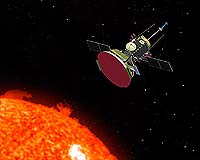
Huntsville AL (SPX) Jun 27, 2008 For more than 400 years, astronomers have studied the sun from afar. Now NASA has decided to go there. "We are going to visit a living, breathing star for the first time," says program scientist Lika Guhathakurta of NASA Headquarters. "This is an unexplored region of the solar system and the possibilities for discovery are off the charts." The name of the mission is Solar Probe+ (pronounced "Solar Probe plus"). It's a heat-resistant spacecraft designed to plunge deep into the sun's atmosphere where it can sample solar wind and magnetism first hand. Launch could happen as early as 2015. By the time the mission ends 7 years later, planners believe Solar Probe+ will solve two great mysteries of astrophysics and make many new discoveries along the way. The probe is still in its early design phase, called "pre-phase A" at NASA headquarters, says Guhathakurta. "We have a lot of work to do, but it's very exciting." Johns Hopkins' Applied Physics Lab (APL) will design and build the spacecraft for NASA. APL already has experience sending probes toward the sun. APL's MESSENGER spacecraft completed its first flyby of the planet Mercury in January 2008 and many of the same heat-resistant technologies will fortify Solar Probe+. (Note: The mission is called Solar Probe plus because it builds on an earlier 2005 APL design called Solar Probe.) At closest approach, Solar Probe+ will be 7 million km or 9 solar radii from the sun. There, the spacecraft's carbon-composite heat shield must withstand temperatures greater than 1400o C and survive blasts of radiation at levels not experienced by any previous spacecraft. Naturally, the probe is solar powered; it will get its electricity from liquid-cooled solar panels that can retract behind the heat-shield when sunlight becomes too intense. From these near distances, the Sun will appear 23 times wider than it does in the skies of Earth. The two mysteries prompting this mission are the high temperature of the sun's corona and the puzzling acceleration of the solar wind: Mystery #1-the corona: If you stuck a thermometer in the surface of the sun, it would read about 6000o C. Intuition says the temperature should drop as you back away; instead, it rises. The sun's outer atmosphere, the corona, registers more than a million degrees Celsius, hundreds of times hotter than the star below. This high temperature remains a mystery more than 60 years after it was first measured. Mystery #2-the solar wind: The sun spews a hot, million mph wind of charged particles throughout the solar system. Planets, comets, asteroids-they all feel it. Curiously, there is no organized wind close to the sun's surface, yet out among the planets there blows a veritable gale. Somewhere in between, some unknown agent gives the solar wind its great velocity. The question is, what? "To solve these mysteries, Solar Probe+ will actually enter the corona," says Guhathakurta. "That's where the action is." The payload consists mainly of instruments designed to sense the environment right around the spacecraft-e.g., a magnetometer, a plasma wave sensor, a dust detector, electron and ion analyzers and so on. "In-situ measurements will tell us what we need to know to unravel the physics of coronal heating and solar wind acceleration," she says. Solar Probe+'s lone remote sensing instrument is the Hemispheric Imager. The "HI" for short is a telescope that will make 3D images of the sun's corona similar to medical CAT scans. The technique, called coronal tomography, is a fundamentally new approach to solar imaging and is only possible because the photography is performed from a moving platform close to the sun, flying through coronal clouds and streamers and imaging them as it flies by and through them. With a likely launch in May 2015, Solar Probe+ will begin its prime mission near the end of Solar Cycle 24 and finish near the predicted maximum of Solar Cycle 25 in 2022. This would allow the spacecraft to sample the corona and solar wind at many different phases of the solar cycle. It also guarantees that Solar Probe+ will experience a good number of solar storms near the end of its mission. While perilous, this is according to plan: Researchers suspect that many of the most dangerous particles produced by solar storms are energized in the corona-just where Solar Probe+ will be. Solar Probe+ may be able to observe the process in action and show researchers how to forecast Solar Energetic Particle (SEP) events that threaten the health and safety of astronauts. Solar Probe+'s repeated plunges into the corona will be accomplished by means of Venus flybys. The spacecraft will swing by Venus seven times in six years to bend the probe's trajectory deeper and deeper into the sun's atmosphere. Bonus: Although Venus is not a primary target of the mission, astronomers may learn new things about the planet when the heavily-instrumented probe swings by. "Solar Probe+ is an extraordinary mission of exploration, discovery and deep understanding," says Guhathakurta. "We can't wait to get started." Community Email This Article Comment On This Article Share This Article With Planet Earth
Related Links the missing link Solar Science News at SpaceDaily
 Celestial Clues Hint At Eclipse In Homer's Odyssey
 New York NY (SPX) Jun 25, 2008
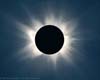
Among countless other debates about Homer's Odyssey -- not the least of which is whether the entire poem can be attributed to Homer himself -- is whether Odysseus returns home to experience a total solar eclipse. But a Rockefeller University scientist and a colleague from Argentina believe they have found astronomical references in the Odyssey that provide corroborating evidence of this celestial event. |
|
|

| The content herein, unless otherwise known to be public domain, are Copyright 1995-2007 - SpaceDaily.AFP and UPI Wire Stories are copyright Agence France-Presse and United Press International. ESA Portal Reports are copyright European Space Agency. All NASA sourced material is public domain. Additional copyrights may apply in whole or part to other bona fide parties. Advertising does not imply endorsement,agreement or approval of any opinions, statements or information provided by SpaceDaily on any Web page published or hosted by SpaceDaily. Privacy Statement |
 del.icio.us
 Digg
Digg Reddit
 YahooMyWeb
 Google
 Facebook