|
 |
 |
 |
 |
 |
 |
 |
 |

 |
NASA's Next Moon Mission Spacecraft Undergoing Critical Tests
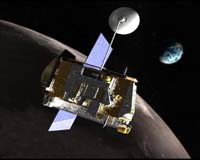
Greenbelt MD (SPX) Jan 11, 2008 NASA's next mission to Earth's closest astronomical body is in the midst of integration and testing at NASA's Goddard Space Flight Center in Greenbelt, Md. The Lunar Reconnaissance Orbiter, known as LRO, will spend at least a year mapping the surface of the moon. Data from the orbiter will help NASA select safe landing sites for astronauts, identify lunar resources and study how the moon's environment will affect humans. Engineers at Goddard are building the orbiter and rigorously testing spacecraft components to ready them for the harsh environment of space. After a component or entire subsystem is qualified, it is integrated into the LRO spacecraft. The core suite of avionics for the orbiter is assembled and undergoing system tests. "This is a major milestone for the mission," said Craig Tooley, LRO project manager at Goddard. "Our team has been working nearly around the clock to get us to this point. Reaching this milestone keeps us on the path to sending LRO to the moon later this year." Various components of the avionics and mechanical subsystem are in the process of going through their qualification program. Six instruments and one technology demonstration aboard the spacecraft will provide important data to enable a safe and productive human return to the moon. The six instruments are scheduled to arrive at Goddard in the coming months for integration. The spacecraft will ship to NASA's Kennedy Space Center, Fla., in August in preparation for launch. The orbiter and the Lunar Crater Observation and Sensing Satellite will launch aboard an Atlas V rocket in late 2008. The trip to the moon will take approximately four days. The Lunar Reconnaissance Orbiter initially will enter an elliptical orbit, also called the commissioning orbit. Once moved into its final orbit, a circular polar orbit approximately 31 miles above the moon, the spacecraft's instruments will map the lunar surface. Community Email This Article Comment On This Article Related Links Lunar Reconnaissance Orbiter Mars News and Information at MarsDaily.com Lunar Dreams and more
 Scientists Detect Lowest Frequency Radar Echo From The Moon
 Washington DC (SPX) Jan 09, 2008
A team of scientists from the Naval Research Laboratory, the Air Force Research Laboratory's (AFRL's) Research Vehicles Directorate, Kirtland Air Force Base, N.M., and the University of New Mexico (UNM) has detected the lowest frequency radar echo from the moon ever seen with earth-based receivers. |
|
|

| The content herein, unless otherwise known to be public domain, are Copyright 1995-2007 - SpaceDaily.AFP and UPI Wire Stories are copyright Agence France-Presse and United Press International. ESA Portal Reports are copyright European Space Agency. All NASA sourced material is public domain. Additional copyrights may apply in whole or part to other bona fide parties. Advertising does not imply endorsement,agreement or approval of any opinions, statements or information provided by SpaceDaily on any Web page published or hosted by SpaceDaily. Privacy Statement |