|
 |
 |
 |
 |
 |
 |
 |
 |

 |
NASA Delays Mars Scout Mission To 2013
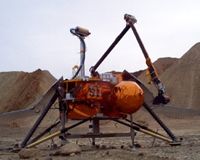
Washington DC (SPX) Dec 24, 2007 NASA has decided that the next mission in the Mars Scout program, originally planned for launch in 2011, is now targeted for launch in 2013. The schedule slip is because of an organizational conflict of interest that was discovered in one of the mission proposal team's Phase A Concept Study. This was the shortest delay for the mission possible because opportunities to send spacecraft to Mars occur only once every 26 months. NASA will fund current proposals to meet a new launch date in 2013. Revised proposals will be due in August 2008, and the evaluation and selection will take place in December 2008. In November, NASA postponed the Scout mission's evaluation, selection, and announcement so the agency could resolve an organizational conflict of interest. The conflict of interest was discovered shortly after the concept study reports were received. The extent of the conflict was severe enough that NASA determined its only recourse was to stop the evaluation and reconstitute the entire review panel that provides the technical and cost analyses for mission selections. "The panel's independent expertise and evaluation are critical to maintaining a fair and competitive mission selection process," said Michael Meyer, lead scientist for NASA's Mars Exploration Program, NASA Headquarters, Washington. "This was a difficult decision, but necessary to preserve the integrity of the process, while ensuring we have adequate resources for the mission we ultimately select." The delay in selection, resulting from reconstituting the entire review team and replanning the evaluation schedule, is approximately four months. Because of the delay, proposers would be left an unacceptable schedule, and schedule reserve, to meet a targeted launch date of 2011. Changing the launch date to the next Mars opportunity in 2013 reestablishes an acceptable and achievable schedule for the mission. "We regret the delay, but NASA is taking this step to be proactive in preventing problems early on," said Mars Exploration Program Director Doug McCuistion, NASA Headquarters. "Because these are cost-capped missions, it is better to address the schedule risk now rather than put the winning proposer at a cost and schedule disadvantage from the start. Delaying the next Scout mission and allowing the mission teams to replan their proposed missions for 2013 reestablishes an acceptable schedule to meet a Mars launch date. It will also reduce the risk of cost overruns driven by the tight mission schedule that would have resulted if launch had remained in 2011." In the first round of the Mars Scout 2006 competition, two missions for 2011 originally selected from 26 proposals for further evaluation in a concept study phase. The selected missions were the Mars Atmosphere and Volatile EvolutioN mission, or MAVEN and the The Great Escape, or TGE, mission. The principal investigator for MAVEN is Bruce Jakosky, University of Colorado, Boulder. The TGE principal investigator is Jim Burch, Southwest Research Institute, San Antonio. Both missions would provide similar measurements of Mars' upper atmosphere, including its dynamics and evolution, which have been given a high priority by the scientific community. The Mars Scout Program is designed to send a series of small, low-cost missions to the Red Planet that are competitively selected. The first robotic spacecraft in this program is the Phoenix lander, which was launched Aug. 4, 2007, and is scheduled to land in the icy northern polar region of Mars on May 25, 2008. Community Email This Article Comment On This Article Related Links Mars Scout at NASA Solar System Mission Page Mars Exploration Program at NASA Mars News and Information at MarsDaily.com Lunar Dreams and more
 Catalina Sky Survey Rocks Mars With New Asteroid Discovery
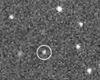 Tucson AZ (SPX) Dec 24, 2007
An asteroid discovered by The University of Arizona's Catalina Sky Survey has a one-in-75 chance of hitting Mars Jan. 30, scientists tracking it say. Catalina Sky Survey team member Andrea Boattini discovered the asteroid, designated 2007 WD5, with UA's Mount Lemmon 60-inch telescope in the Santa Catalina Mountains north of Tucson on Nov. 20. |
|
|

| The content herein, unless otherwise known to be public domain, are Copyright 1995-2007 - SpaceDaily.AFP and UPI Wire Stories are copyright Agence France-Presse and United Press International. ESA Portal Reports are copyright European Space Agency. All NASA sourced material is public domain. Additional copyrights may apply in whole or part to other bona fide parties. Advertising does not imply endorsement,agreement or approval of any opinions, statements or information provided by SpaceDaily on any Web page published or hosted by SpaceDaily. Privacy Statement |