|
 |
 |
 |
 |
 |
 |
 |
 |

 |
NASA's Centennial Challenges To Advance Technologies
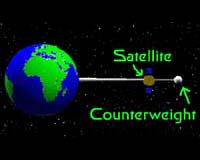
Washington DC (SPX) Aug 29, 2007 From Oct. 19 to 21, more than 20 teams from across the nation and around the world will compete for a total of $1,000,000 from NASA for the development of cutting-edge technologies. The Beam Power Challenge and Tether Challenge, two of NASA's seven Centennial Challenges, will take place at the 2007 Space Elevator Games at the Davis County Event Center in Salt Lake City. "The innovations from these competitions will help support advances in aerospace materials and structures, new approaches to robotic and human planetary surface operations, and even futuristic concepts," said Ken Davidian, program manager for NASA's Centennial Challenges, Headquarters, Washington. The Spaceward Foundation is conducting the challenges as part of the Space Elevator Games at no cost to NASA. The Beam Power Challenge promotes the development of new power distribution technologies that can be applied to space exploration. This competition requires teams to design and build a climber machine that can travel up and down a ribbon while carrying a payload. Power will be beamed from a transmitter to a receiver on the climber. Each climber must scale a height of approximately 330 feet traveling at a minimum speed of 2 meters per second. As many as three teams with the highest qualifying scores could win the competition and share the $500,000 purse. Technologies demonstrated in this competition could have applications for future planetary surface operation with robots or humans. The purpose of the Tether Challenge is to develop very strong, lightweight material. Super-strong tethers could enable advances in aerospace capability, including rocket weight reduction, habitable space structures, solar sails, or tether-based propulsion systems. The challenge will be conducted in two rounds that test the strength of each team's tether. As many as three teams could share the $500,000 prize. The winners must demonstrate a technology at least 50 percent stronger than a baseline, state-of-the-art tether that uses off-the-shelf materials. The space elevator is an Earth-to-space transportation system proposed in the 1960s and enhanced in 2000 by Dr. Bradley Edwards of Los Alamos National Laboratory in New Mexico. The system is comprised of a stationary cable moving in unison with the Earth, with one end anchored to the surface of the planet and the other in space. Electric cars then would travel up and down the cable, carrying cargo and people. Community Email This Article Comment On This Article Related Links Centennial Challenges Space Tourism, Space Transport and Space Exploration News
 Science Teachers Take Flight In Zero-Gravity
 Los Angeles CA (SPX) Aug 29, 2007
The Northrop Grumman Foundation kicked off the second year of its Weightless Flights of Discovery Program today, flying 57 teachers in Dallas, with another 58 scheduled to fly in New Orleans on Aug. 30. These are the first of the flights in eight cities planned as part of the company's program to inspire the next generation of scientists, mathematicians and engineers -- critical areas where the U.S. has fallen behind globally. |
|
|

| The content herein, unless otherwise known to be public domain, are Copyright 1995-2007 - SpaceDaily.AFP and UPI Wire Stories are copyright Agence France-Presse and United Press International. ESA Portal Reports are copyright European Space Agency. All NASA sourced material is public domain. Additional copyrights may apply in whole or part to other bona fide parties. Advertising does not imply endorsement,agreement or approval of any opinions, statements or information provided by SpaceDaily on any Web page published or hosted by SpaceDaily. Privacy Statement |