|
 |
 |
 |
 |
 |
 |
 |
 |

 |
NARAC Expands Its Reach
Livermore CA (SPX) Jul 02, 2004 In a boost for homeland security, the National Atmospheric Release Advisory Center (NARAC) will soon be able to track and predict the movement of chemical and biological agents and other hazardous material indoors as well as outdoors. The expanded capability is the result of a two-year collaboration between NARAC, based at Lawrence Livermore National Laboratory (LLNL), and a team from the Environmental Energy Technologies Division at Lawrence Berkeley National Laboratory (LBNL). "NARAC is a widely used tool for pre-event emergency planning," said LBNL project leader Ashok Gadgil, "but planners currently only have information about outdoor concentrations". "This new capability will give planners and emergency commanders access to accurate, real-time estimates of indoor and outdoor toxics concentrations, which provide a basis for informed evacuation decisions." "Remaining indoors can be much safer than trying to evacuate," Gadgil said. "The improved NARAC system will finally provide data on which to base these decisions." The NARAC enhancement is part of an LBNL-led program to minimize casualties in buildings and transportation facilities from both outdoor and indoor releases of chemical or biological weapons. Inspired in part by the October 2001 anthrax mailings, the multi-lab effort is aimed at helping the nation's building managers, emergency planners and first responders understand how to prepare for and counter a weapons of mass destruction or WMD, attack. The project, which also involves Sandia National Laboratories and the University of California at Berkeley, recently received a 2004 Federal Laboratory Consortium award for excellence in technology transfer. NARAC provides an automated, state-of-the-art atmospheric modeling capability that can predict the movement of nuclear, radiological, chemical and biological releases in the atmosphere and estimate their potential effect on exposed populations. While NARAC has traditionally focused on outdoor releases, "the Berkeley lab team's specialty is indoor aerosol transport and fate," said NARAC's Gayle Sugiyama. "We are collaborating with them on developing building infiltration modeling capabilities to predict indoor concentrations from outdoor releases and integrating them into the NARAC system." To create the models, the team compiled air infiltration measurements from 70,000 homes and developed a statistical method to predict the distribution of air infiltration for every 8,000-resident census tract in the United States. A key feature of the model is that predictions can be made for particularly "leaky" or "tight" houses as well as typical houses in each area. Sugiyama said a new infiltration model for residential buildings is now being tested, and the team recently began work on an approach for treating commercial buildings. The project also provides advice for building operators through its "Secure Buildings" Website, which has had thousands of visitors viewing more than 40,000 pages since early 2002. The LBNL team worked with Sandia to provide recommendations to airport managers on preparation, training and event response; and it created first responder training materials for the California Peace Officers Standards and Training Agency, which has used the materials to train police officers throughout the United States. "These efforts have improved the readiness and safety of the nation's police officers, the security of the nation's buildings and their inhabitants, the effectiveness of local emergency response, and the safety of the U.S. air transportation network," Gadgil said. "A major attack may still have consequences, but they will be lessened because of the project's scientific work and outreach." Community Email This Article Comment On This Article Related Links NARAC SpaceDaily Search SpaceDaily Subscribe To SpaceDaily Express Earth Observation News - Suppiliers, Technology and Application
 New Legislation Initiated To Support Commercial Remote Sensing Industry
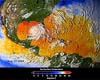 New York NY (SPX) Jan 11, 2006
The importance of remotely sensed data and technologies to support natural disasters has prompted attention and action in Washington. New initiatives and legislation authorizing appropriations to the remote sensing industry will be discussed at Strategic Research Institute's U.S. Commercial Remote Sensing Industry conference, scheduled for February 9-10, 2006 in Washington D.C. |
|
|

| The content herein, unless otherwise known to be public domain, are Copyright 1995-2006 - SpaceDaily.AFP and UPI Wire Stories are copyright Agence France-Presse and United Press International. ESA PortalReports are copyright European Space Agency. All NASA sourced material is public domain. Additionalcopyrights may apply in whole or part to other bona fide parties. Advertising does not imply endorsement,agreement or approval of any opinions, statements or information provided by SpaceDaily on any Web page published or hosted by SpaceDaily. Privacy Statement |