
 |
 |
 |
 |
 |
 |
 |
 |
 |

 |
Mussels Aid In Analysis Of Port Pollution
Basque Country, Spain (SPX) Aug 04, 2008 Studying living things can prove to be highly significant when evaluating contamination suffered by a specific environment. A research team from the University of the Basque Country (UPV/EHU), with Dr. Nestor Etxebarria as director, is involved in this monitoring of contaminants. As Dr. Etxebarria explains, "it is known that ports are contaminated; what we are investigating is to what extent the contaminants therein reach aquatic organisms". The project, Comprehensive evaluation of contamination in sediments at ports along the northern Spanish coast, using chemical, biochemical and ecotoxicological tools, is within the remit of the lines of research by the Analytical Research and Innovation (IBEA) research team led by Professor Juan Manuel Madariaga, and aided by doctors Alberto de Diego, Gorka Arana, Aresatz Usobiaga and Olatz Zuloaga.
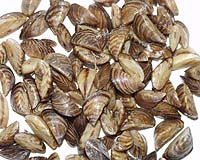
Biomonitoring of metals and organic substances They measure the concentration of contaminants and analyse the biological consequences that these cause in the aquatic organisms, using biomonitoring. "We take mussels from clean waters and place them at points we wish to analyse in order to see how much and what kind of contamination is accumulated", stated Dr Etxebarria. "The Galician biologists are in charge of studying the consequences of the contaminants on the mussels; we measure the concentration of the contaminants received by the mussels", he added. The object of the research is to answer questions such as: where is each kind of contamination located? What is the chemical origin of each? Of all the contaminants, the UPV/EHU team have only managed to analyse a few, amongst which is tributyltin (TBT) metal, used in the past for painting the hulls of vessels. "Today TBT is banned but it is highly durable and it can still be found in waters", stated Dr Etxebarria. Organic substances have also been studied, such as polyaromatic carbohydrates (PAH) from ships fuel, the phtalates used in making plastics or the polychloride biphenyls (PCBs) derived from oils. "These last are similar to dioxines and in the past were used in very powerful transformers. They are also prohibited, but are still present in the water", said Dr. Etxebarria.
Biological and chemical sampling "We place 20 or 30 mussels mounted on plastic supports and inside gauzes, and submerge them at a depth of two metres", explained Dr Etxebarria, "after a certain period, we collect them for analysis of level and type of contamination accumulated". But using living beings to measure contamination also has its risks. "In some cases the contamination is high and the mussels can die", states Dr Etxebarria. This is why the UPV/EHU team has created a new method for monitoring contaminants: "by using polymeric mountings, we simulate chemically what the mussels do, i.e. accumulate contaminants". Moreover, in this way, it is possible to systemise the sampling.
Evaluation of the tools "The situation in the port of Bilbao is quite homogenous; we have taken samples in the areas of Getxo, Santurce and the exterior port (Bilbao, in the Basque Country) and the results are similar in each case. On the other hand, in Vigo (Galicia) we detected wide differences from one zone to another, for example between water near a shipyard and the open sea", Dr Etxebarria said. Apart from carrying out a diagnosis of port waters, another aim of the project is to evaluate the methodology and tools of the sampling. The European Directive on water obliges government bodies to monitor contaminants in all canals and along all coasts. "We wish to know if our methodology and the sampling tools that we have developed are useful for this purpose", said Dr Etxebarria. "On the one hand, we have seen that zones supposedly clean are not as clean as we thought; it is necessary to redefine the selection of these clean zones. On the other, we are also perfecting the tool that chemically simulates the role of the mussels, in order to carry out even more precise sampling", he concluded. Community Email This Article Comment On This Article Share This Article With Planet Earth
Related Links University of the Basque Country Our Polluted World and Cleaning It Up
 Japanese plan world's largest cleanup
 Tokyo (AFP) July 30, 2008
An environmental group in Japan said Wednesday it is planning to hold what it hopes will be the world's largest clean-up, bringing 180,000 volunteers together to pick up trash. |
|
|

| The content herein, unless otherwise known to be public domain, are Copyright 1995-2007 - SpaceDaily.AFP and UPI Wire Stories are copyright Agence France-Presse and United Press International. ESA Portal Reports are copyright European Space Agency. All NASA sourced material is public domain. Additional copyrights may apply in whole or part to other bona fide parties. Advertising does not imply endorsement,agreement or approval of any opinions, statements or information provided by SpaceDaily on any Web page published or hosted by SpaceDaily. Privacy Statement |
 del.icio.us
 Digg
Digg Reddit
 YahooMyWeb
 Google
 Facebook