
 |
 |
 |
 |
 |
 |
 |
 |
 |

 |
Mount Lemmon SkyCenter Astronomer Takes Astronomy Picture Of The Day
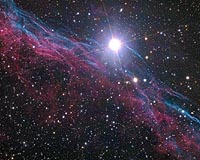
Tempe AZ (SPX) Aug 20, 2008 A stunning new astronomical image of the "Witch's Broom" Nebula taken by Adam Block of The University of Arizona Mount Lemmon SkyCenter is today's "Astronomy Picture of the Day." Block of the UA's Steward Observatory, who coordinates public programs in astronomy at the SkyCenter, used the SkyCenter's 24-inch telescope to produce the image. The telescope is the same one that the public uses in SkyNights, the astronomy evenings that Block runs atop 9,157-foot Mount Lemmon in the Santa Catalina Mountains north of Tucson. It is also the telescope that Block, an astrophotographer of renown, is using this week to teach a 3-day SkyCenter workshop called "Making Every Pixel Count." Block will share his expertise in producing spectacular images of deep sky objects with a dozen enrolled participants. The Astronomical Picture of the Day Website, known as APOD, was founded in 1995 by two professional astronomers, Robert Nemiroff of Michigan Technological University in Houghton, Mich., and Jerry Bonnell of NASA's Goddard Space Flight Center in Greenbelt, Md. The team, who continue to write, coordinate and edit APOD, has by now assembled the largest collection of annotated astronomical images on the Internet. Block used the SkyCenter's 24-inch RC Optical Systems telescope with an SBIG STL-11000 CCD camera and Custom Scientific filters to acquire the image on July 29. "I took three hours of unfiltered data and combined it with 50 minutes of color data in each filter (red, green and blue), so the total exposure time was 5.5 hours," he said. Nemiroff and Bonnell posted this explanation along with Block's image: "Ten thousand years ago, before the dawn of recorded human history, a new light must suddenly have appeared in the night sky and faded after a few weeks. Today we know this light was an exploding star and record the colorful expanding cloud as the Veil Nebula. "Pictured here is the west end of the Veil Nebula, known technically as NGC 6960, but less formally as the Witch's Broom Nebula. The expanding debris cloud gains its colors by sweeping up and exciting existing nearby gas. The supernova remnant lies about 1400 light years away towards the constellation of Cygnus. This Witch's Broom actually spans over three times the angular size of the full moon. The bright star Cygnus is visible with the unaided eye from a dark location but is unrelated to the ancient supernova." The UA's Mount Lemmon SkyCenter offers public observing opportunities, workshops and hands-on learning experiences in many sciences. Community Email This Article Comment On This Article Share This Article With Planet Earth
Related Links University of Arizona Astronomy News from Skynightly.com
 Giant Astronomical Survey Completes Its Mission
 Chicago IL (SPX) Aug 18, 2008
After a decade of construction and eight years of operation (SDSS-I, 2000-2005; SDSS-II, 2005-2008), the Sloan Digital Sky Survey (SDSS) completed its observations in mid-July and will release its final data set to the public in October. SDSS-III, a six-year program composed of four new surveys, has now begun, using the same telescope. |
|
|

| The content herein, unless otherwise known to be public domain, are Copyright 1995-2007 - SpaceDaily.AFP and UPI Wire Stories are copyright Agence France-Presse and United Press International. ESA Portal Reports are copyright European Space Agency. All NASA sourced material is public domain. Additional copyrights may apply in whole or part to other bona fide parties. Advertising does not imply endorsement,agreement or approval of any opinions, statements or information provided by SpaceDaily on any Web page published or hosted by SpaceDaily. Privacy Statement |
 del.icio.us
 Digg
Digg Reddit
 YahooMyWeb
 Google
 Facebook