|
 |
 |
 |
 |
 |
 |
 |
 |

 |
Motorola Ready To Sign Over Iridium Network
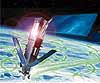
Chandler - October 30, 1998 - Motorola has completed testing and system readiness of the Iridium System for commercial activation. Its customer, Iridium LLC, announced yesterday that voice quality and call completion rates have met its standards and that it will begin commercial service as planned on Nov. 1, 1998. "Motorola announced the Iridium System to the world in 1990. Today we are delivering on the promise of communicating with anyone, anytime, virtually anywhere on Earth from space," said Christopher Galvin, Motorola chief executive officer. "As we have done many times before, Motorola has pioneered a new industry with the development of the world's first low-earth-orbit, global, digital, wireless telecommunications network. Few corporations in the world have the confidence to design and deliver a global, digital, packetized network this ambitious." Motorola is the inventor and prime contractor for the Iridium System. "An idea proposed by three engineers in Arizona in 1987 has revolutionized the world of telecommunications," said Bary Bertiger, senior vice president and general manager of the Motorola Satellite Communications Group. "We've capitalized on our four-decade heritage in space, digital networking capabilities, and new technology to accomplish what many said was impossible -- a constellation of low-earth-orbiting satellites connected with a network of gateways to provide global coverage for personal communications." Technological Achievements Motorola established several low-earth-orbit satellite industry firsts during development and deployment of the Iridium System including: The overall health of the Iridium constellation remains very good and service quality should meet customer expectations. Motorola has a five-year operations and maintenance contract with Iridium LLC and will replenish satellites in the constellation as needed. The Iridium System operates as a constellation, so a malfunctioning or failed satellite does not have a major, detrimental effect on its ability to provide global coverage. The crosslinking and dynamic routing among the satellites, combined with the increasing overlap of their "footprints" as they move away from the equator and approach the poles, minimizes any potential loss of service. "We factored occasional satellite loss into our planning and the satellite failures we've experienced will not adversely influence the overall quality of the Iridium System when it goes into commercial service," Bertiger said. Ground Segment "The gateways control the intelligent global network, making possible the link between the Iridium satellites and the worldwide patchwork of fixed and cellular phone standards," said Rickie Currens, corporate vice president and general manager of the Ground Systems Division. "Motorola has developed the first truly global digital system to provide equal quality of service anywhere on the planet." Motorola teams of engineers, technicians and business managers have worked round-the-clock, seven days a week, in cross-cultural environments with partners around the world to meet the ambitious installation and deployment timelines to bring the gateways on line. The initial 12 gateways are:
Motorola operates the global Iridium System network from the Satellite Network Operations Center (SNOC) located in Landsdowne, Va., near the Dulles International Airport. From this new, state of the art facility, 250 Motorola engineers and operators man the satellite flight control stations 24 hours a day, seven days a week, making more than 700 contacts daily with the satellites in the constellation. There are two backup control facilities: one in Rome, Italy; the other at the Motorola Satellite Communications Group headquarters in Chandler, Ariz. The SATCOM facility served as the control center for the first three Iridium missions until the Satellite Network Operations Center became operational late last year. "Motorola is controlling what we believe is the largest commercial satellite constellation, and we are doing it with a degree of efficiency unmatched anywhere," said Mark Borota, corporate vice president and general manager of the Mobile Satellite Systems Division which is responsible for the space and control segments of the Iridium program. Motorola is a global leader in advanced electronic systems and services. It liberates the power of technology by creating software-enhanced products that provide integrated customer solutions and Internet access via wireless and satellite communications, as well as computing, networking, and automotive electronics. Motorola also provides essential digital building blocks in the form of embedded semiconductors, controls and systems. Sales in 1997 were $29.8 billion.
Iridium Reports At SpaceDaily
Email This Article Comment On This Article Related Links Space
 Satellite Launch To Boost DTH In India
 Calcutta, India (SPX) Dec 28, 2005
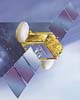
The successful launch Thursday of India's heaviest satellite from spaceport of Kourou in French Guyana may have boosted the country's space research efforts to yet another level, but it has also lifted the spirits of at least three Direct-To-Home televisions broadcasters, one of which has been waiting for years to launch its services in India. |
|
|

|
|
|
|
|
|
|
|
|
|
|
|
| The content herein, unless otherwise known to be public domain, are Copyright 1995-2006 - SpaceDaily.AFP and UPI Wire Stories are copyright Agence France-Presse and United Press International. ESA PortalReports are copyright European Space Agency. All NASA sourced material is public domain. Additionalcopyrights may apply in whole or part to other bona fide parties. Advertising does not imply endorsement,agreement or approval of any opinions, statements or information provided by SpaceDaily on any Web page published or hosted by SpaceDaily. Privacy Statement |