
 |
 |
 |
 |
 |
 |
 |
 |
 |

 |
Monash Fuels Next Gen Hybrid Cars
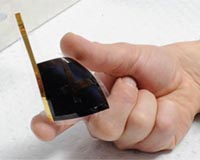
Melbourne, Australia (SPX) Aug 07, 2008 Monash University scientists have revolutionised the design of fuel cells used in the latest generation of hybrid cars which could make the vehicles more reliable and cheaper to build. The breakthrough, published in the journal Science, revolves around the design of a fuel cell in which a specially-coated form of popular hi tech outdoor and sporting clothing material Goretex is the key component. The team of Monash scientists have designed and tested an air-electrode, where a fine layer - just 0.4 of a micron thick, or about 100 times thinner than a human hair - of highly conductive plastic is deposited on the breathable fabric. The conductive plastic acts as both the fuel cell electrode and catalyst. Monash University's Dr Bjorn Winther-Jensen said just as Goretex had revolutionised the outdoor clothing industry, it could hold similar promise for motorists. "The same way as waste vapour is drawn out of this material to make hikers more comfortable to less prone to hypothermia, so it is able to 'breathe' oxygen into our fuel cell and into contact with the conductive plastic," Dr Winter-Jensen said. Monash University's Professor Doug MacFarlane from the Australian Centre for Electromaterials Science (ACES) said the discovery was probably the most important development in fuel cell technology in the last 20 years. "The benefits for the motoring industry and for motorists are that the new design removes the need for platinum, which acts as the catalyst and is currently central to the manufacturing process," Professor MacFarlane said. "Our reliance on platinum is making the likelihood of using fuel cells in everyday passenger cars, increasingly improbable. "The cost of the platinum component alone of current fuel cells for a small car with a 100kW electric engine is more than the total cost of an 100kW gasoline engine. Also current annual world production of platinum is only sufficient for about 3 million 100kW vehicles, less than one-twentieth of the current annual global production of vehicles." The new design fuel cell has been tested for periods of up to 1500 hours continuously using hydrogen as the fuel source. Professor Maria Forsyth, Director of ACES at Monash said testing has shown no sign of material degradation or deterioration in performance. The tests also confirmed that oxygen conversion rates are comparable with platinum-catalysed electrodes of the same geometry and found electrodes are not poisoned by carbon monoxide the way platinum is. "The small amounts of carbon monoxide that are always present in exhausts from petrol engines are a real problem for fuel cells because the platinum catalyst is slowly poisoned, eventually destroying the cell, "Professor Forsyth said. "The important point to stress is that the team has come up with an alternative fuel cell design that is more economical, more easily sourced, outlasts platinum cells and is just as effective." Community Email This Article Comment On This Article Share This Article With Planet Earth
Related Links Monash University Car Technology at SpaceMart.com
 Nissan Motor unveils new prototype electric car
 Tokyo (AFP) Aug 6, 2008
Nissan Motor Co. unveiled a new prototype electric vehicle Wednesday with batteries twice as powerful as conventional technology, aiming to take a lead in zero-emission cars. |
|
|

| The content herein, unless otherwise known to be public domain, are Copyright 1995-2007 - SpaceDaily.AFP and UPI Wire Stories are copyright Agence France-Presse and United Press International. ESA Portal Reports are copyright European Space Agency. All NASA sourced material is public domain. Additional copyrights may apply in whole or part to other bona fide parties. Advertising does not imply endorsement,agreement or approval of any opinions, statements or information provided by SpaceDaily on any Web page published or hosted by SpaceDaily. Privacy Statement |
 del.icio.us
 Digg
Digg Reddit
 YahooMyWeb
 Google
 Facebook