
 |
 |
 |
 |
 |
 |
 |
 |
 |

 |
Missile Envy Dominates Asian Military Plans
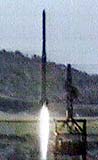
Seoul (AFP) December 13, 1999 - Cash-strapped North Korea hopes to export medium-range ballistic missiles despite a moratorium on new test launches, South Korean reports said Sunday. The first client of North Korea's "Daepodong" missile with an estimated range of 1,380 kilometers (828 miles) will likely be Iran, Seoul's Yonhap news agency said. It quoted diplomatic sources as saying the price tag of each Daepodong missile would be six million dollars. Caption: TV picture released by WTN shows the launching of North Korean multi-stage rocket 31 August, which North Korea claims carries its first satellite at Musudan-ri, Hwadae County, in North Hamgyong province, North Korea's official radio reported. Officials in the United States, South Korea and Japan are at odds with North Korea over whether the launch was a successful satellite vehicle or a Taepo-Dong 1 medium-range ballistic missile, as they had earlier insisted. North Korea has been suspected of exporting missiles to Pakistan and the Middle East. South Korean experts believe the Stalinist nation has built at least ten Daepodong missiles. Its suspected exports have been the subject of international concern since what was believed to be a Taepodong-I was fired over Japan in August last year. Pyongyang froze its missile tests in September in return for the partial lifting of US economic sanctions. The freeze prompted the resumption of rapproachment talks between Washington and Pyongyang, which fought during the 1950-53 Korean War. US special envoy Charles Kartman will make a five-day visit here from Tuesday to consult South Korean officials on preparations for high-level political talks between Washington and Pyongyang.
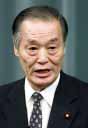
"I am looking forward to greater transparency," he added. Caption: Newly appointed Japanese Defense Agency Director General Tsutomu Kawara speaks to reporters during a press conference at the prime minister's official residence in Tokyo 05 October 1999. Japan's Prime Minister Keizo Obuchi replaced most of his ministers in a reshuffle to launch an enlarged coalition government. Photo by Toru Yamanaka - Copyright AFP Japan has been prodded to seek warmer ties with North Korea following its pledge in September to freeze missile tests while it is engaged in talks with the United States. A delegation from Japanese political parties agreed in Pyongyang last week with North Korea's ruling Workers Party to help re-launch talks on normalising diplomatic relations between the two countries. "We can hardly say anything definite and in detail about specific (missile) deployments because of North Korea's closed system as well as the mobile method of its (missile) operations," the defence minister said. He added, "But it is highly possible that they (missiles) still remain in deployment as a serious destablising factor in northeast Asia." North Korea fired a suspected medium-range Taepodong-I missile over Japan and into the Pacific in August last year. Pyongyang said it was a satellite launch. The launch led Tokyo to take sanctions against Pyongyang, including a halt to rapprochement talks and a freeze on food aid to the hunger-stricken Stalinist state. With a promise to lift an economic embargo, Washington persuaded Pyongyang into freezing further missile tests, amid fears that the North was ready to fire a longer-range missile which could reach parts of the United States.
Vice President Lien Chan (R) and Premier Vincent Siew are cheered by supporters outside the headquarters of the ruling Kuomintang after they are respectively nominated as the presidential and vice presidential candidates during the party's decision-making meeting 27 August, 1999. The pair are expected to receive an endorsement by an overwhelming majority of delegates when the party holds a congress Sunday. The presidential elections are slated for March. Photo by Leo Chang Copyright AFP "The Republic of China's (Taiwan) military delegation for the first time offered to buy 'a missile-related item', aside from renewing purchase of weaponry at a meeting in Washington last month," the state-funded Central News Agency reported in a dispatch from Washington. "The US asked Taiwan to clarify the purpose of the military item," sources were quoted as saying. A US official however told the agency that "Washington may not give its nod if the item would be used to develop weaponry that could be used to attack the mainland." He said the US had turned down Taiwan's bids to procure diesel-powered submarines and advance medium-range air-to-air missiles on grounds that they could be used as offensive weaponry. Taiwan's defense ministry declined to comment on the report. The US has provided Taiwan with defensive weapons since Washington switched its diplomatic recognition from Taipei to Beijing in 1979 in accordance with the Taiwan Relations Act. Taiwanese Vice President Lien Chan said for the first time Wednesday that Taiwan should develop long-range ground-to-ground missiles to counter China. In order to deter China from invading Taiwan, "the naval and air force must be strengthened ... and long-range ground-to-ground missiles developed," he said. Chinese leaders renewed their option of using force after Taiwanese President Lee Teng-hui redefined the cross-strait links as a "special state-to-state relationship" in July. But Defense Minister Tang Fei admitted Wednesday "there would be difficulties in developing long-range ground-to-ground missiles without foreign assistance, and (the program) would be made even more difficult if opposed by foreign countries." Taiwan secretely launched the "Tien Ma (Sky Horse)" missile program in the 1980s, planning to develop ground-to-ground missiles with a range of 1,000 kilometers (620 miles), Unconfirmed reports said the program was called off under pressure from Washington. Copyright 1999 AFP. All rights reserved. The material on this page is provided by AFP and may not be published, broadcast, rewritten or redistributed. Community Email This Article Comment On This Article Related Links Space
 Satellite Launch To Boost DTH In India
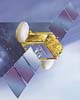 Calcutta, India (SPX) Dec 28, 2005
The successful launch Thursday of India's heaviest satellite from spaceport of Kourou in French Guyana may have boosted the country's space research efforts to yet another level, but it has also lifted the spirits of at least three Direct-To-Home televisions broadcasters, one of which has been waiting for years to launch its services in India. |
|
|

|
|
|
|
|
|
|
|
|
|
|
|
| The content herein, unless otherwise known to be public domain, are Copyright 1995-2006 - SpaceDaily.AFP and UPI Wire Stories are copyright Agence France-Presse and United Press International. ESA PortalReports are copyright European Space Agency. All NASA sourced material is public domain. Additionalcopyrights may apply in whole or part to other bona fide parties. Advertising does not imply endorsement,agreement or approval of any opinions, statements or information provided by SpaceDaily on any Web page published or hosted by SpaceDaily. Privacy Statement |
 Japan Fears The Bubble Boy
 Taiwan Seeks US Technology