|
 |
 |
 |
 |
 |
 |
 |
 |

 |
Missile Defense Element Successfully Flight Tested
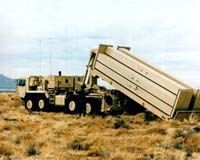
Washington (AFNS) Jul 28, 2006 The Missile Defense Agency successfully completed a developmental flight test of a major element of its ballistic missile defense system recently at White Sands Missile Range, N.M., agency officials said. Initial indications show that the test achieved what it set out to do: test parts of the Terminal High Altitude Area Defense system to ensure they work together, officials said. The THAAD components include truck-mounted launchers, interceptor missiles, radars, and fire control and communications management. The latest test aimed to demonstrate that the THAAD system could follow a trajectory required to hit a target -- in this case, a Hera target missile -- just inside the earth's atmosphere. In doing so, it successfully locked onto, intercepted and destroyed the missile, officials reported. That's an important milestone in developing the THAAD, the first weapon system designed specifically to engage targets both with and outside the earth's atmosphere. This capability makes it a critical part of the layered missile defense system, officials said. The mobile THAAD system can be airlifted to almost anywhere in the world within hours and is designed to defend against short-, medium- and long-range ballistic missiles during the critical final minute of flight, according to a Missile Defense Agency news release. Its ability to operate at higher altitudes provides more protection of larger areas than lower-tier systems, officials said. This test, the third such test flight, also demonstrated the interceptor's ability to respond to directions to engage an incoming ballistic missile target and provide in-flight target updates, officials said. Previous THAAD tests focused primarily on launching the interceptor. Remaining flight tests will build on the test results and evaluate the THAAD's capability in increasingly challenging scenarios. The current U.S. ballistic missile defense system, which includes nine ground-based interceptor missiles at Fort Greely, Alaska, and two at Vandenberg Air Force Base, Calif., is still being developed. The system aims to integrate land-, sea-, and air-based missile defenses to protect the U.S. homeland, deployed troops, and America's friends and allies against all types of ballistic missiles in all phases of flight, officials said. Soldiers from the 6th Air Defense Artillery Brigade participated in the test, conducting radar operations and assisting contractors at the launcher and fire control and communications operations. The U.S. Army will operate the THADD system when it is fielded. Community Email This Article Comment On This Article Related Links Missile Defense Agency Learn about missile defense at SpaceWar.com Learn about missile defense at SpaceWar.com Learn about nuclear weapons doctrine and defense at SpaceWar.com All about missiles at SpaceWar.com Learn about the Superpowers of the 21st Century at SpaceWar.com
 Taiwan Successfully Test Fires Patriot Missile Defense System
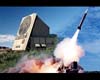 Tewksbury MA (SPX) Jul 27, 2006
The Republic of China successfully destroyed two surrogate ballistic missiles with the Patriot Air and Missile Defense System during the Han Kuang military exercises conducted near Ilan in the northeast region of Taiwan. |
|
|

| The content herein, unless otherwise known to be public domain, are Copyright 1995-2006 - SpaceDaily.AFP and UPI Wire Stories are copyright Agence France-Presse and United Press International. ESA PortalReports are copyright European Space Agency. All NASA sourced material is public domain. Additionalcopyrights may apply in whole or part to other bona fide parties. Advertising does not imply endorsement,agreement or approval of any opinions, statements or information provided by SpaceDaily on any Web page published or hosted by SpaceDaily. Privacy Statement |