|
 |
 |
 |
 |
 |
 |
 |
 |

 |
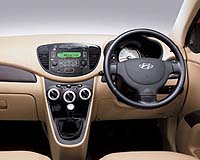
Microsoft, Hyundai agree on joint development of new system
Seoul (AFP) May 6, 2008 US software giant Microsoft and South Korea's top automaker Hyundai Motor have forged a deal jointly to develop a new in-vehicle music and entertainment system, officials said Tuesday. Hyundai officials said Microsoft head Bill Gates would attend a ceremony later in the day at which the deal would be signed. Gates is in Seoul to attend the annual Seoul Digital Forum. Microsoft and Hyundai will jointly establish an auto IT innovation centre, the Korean company said. Over the next five years, Hyundai will invest a total of 166 million dollars to bring IT technology advancements into the car and to develop new in-car services, it said. Microsoft will invest 113 million dollars. For years, Microsoft has been trying to expand its software dominance beyond offices and homes. "These new systems will redefine consumer experiences in the car," Martin Thall, general manager of Microsoft's automotive business unit, said in a statement released by Hyundai. "We're now aligned to develop the next generation of in-car infotainment systems," he added. Hyundai said the system would be controlled by the driver's voice and linked with other handheld digital devices such as mobile phones and MP3 music players. It said the deal would help Hyundai upgrade its brand awareness abroad. The Hyundai group which includes affiliate Kia Motors controls 70 percent of the country's auto market and accounts for 5.4 percent of gross domestic product. It aims to become the world's number five carmaker, from number six currently. Community Email This Article Comment On This Article Related Links Car Technology at SpaceMart.com
 Plug-In Hybrid School Bus Gains 70 Percent Improved Fuel Economy And Lower Emissions
 Torrance CA (SPX) May 02, 2008
Recent dynamometer test results conclude that IC Bus school buses using post-transmission hybrid drive systems from Enova Systems can improve fuel efficiency by more than 70 percent compared to standard diesel-powered school buses. The Enova hybrid drive systems installed in the IC Bus school buses also significantly reduce carbon dioxide, NOx and particulate matter emissions. |
|
|

| The content herein, unless otherwise known to be public domain, are Copyright 1995-2007 - SpaceDaily.AFP and UPI Wire Stories are copyright Agence France-Presse and United Press International. ESA Portal Reports are copyright European Space Agency. All NASA sourced material is public domain. Additional copyrights may apply in whole or part to other bona fide parties. Advertising does not imply endorsement,agreement or approval of any opinions, statements or information provided by SpaceDaily on any Web page published or hosted by SpaceDaily. Privacy Statement |