
 |
 |
 |
 |
 |
 |
 |
 |
 |

 |
Microchip to aid lung cancer treatments
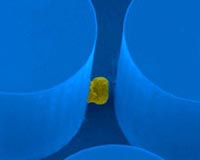
Boston (UPI) Jul 8, 2008 U.S. medical scientists say they've found circulating tumor cells reveal genetic signatures of dangerous lung cancers, possibly leading to targeted therapy. Massachusetts General Hospital investigators say a microchip-based device they developed -- called the CTC chip -- can detect and analyze tumor cells in the bloodstream to determine the genetic signature of lung tumors. "When the device is ready for larger clinical trials, it should give us new options for measuring treatment response, defining prognostic and predictive measures and studying the biology of blood-borne metastasis, which is the primary method by which cancer spreads and becomes lethal," said Dr. Daniel Haber, the study's senior author. CTCs -- circulating tumor cells -- are living solid-tumor cells found at extremely low levels in the bloodstream. Until the development of the chip it wasn't possible to get information from CTCs that would be useful for clinical decision-making. The current study was designed to determine whether the device could go beyond detecting CTCs to helping analyze the genetic mutations that can make a tumor sensitive to treatment with targeted therapy drugs. A pilot study of the device is to appear in the July 24 issue of the New England Journal of Medicine. Community Email This Article Comment On This Article Share This Article With Planet Earth
Related Links Hospital and Medical News at InternDaily.com
 Bacterial Resistance Is Futile Against Wound-Cleaning Laser
 Washington DC (SPX) Jul 07, 2008
A laser-activated antimicrobial offers hope for new treatments of bacterial infections, even those that are resistant to current drugs. Research published in the open access journal BMC Microbiology describes the use of a dye, indocyanine green, which produces bacteria-killing chemicals when lit by a specific kind of laser light. |
|
|

| The content herein, unless otherwise known to be public domain, are Copyright 1995-2007 - SpaceDaily.AFP and UPI Wire Stories are copyright Agence France-Presse and United Press International. ESA Portal Reports are copyright European Space Agency. All NASA sourced material is public domain. Additional copyrights may apply in whole or part to other bona fide parties. Advertising does not imply endorsement,agreement or approval of any opinions, statements or information provided by SpaceDaily on any Web page published or hosted by SpaceDaily. Privacy Statement |
 del.icio.us
 Digg
Digg Reddit
 YahooMyWeb
 Google
 Facebook