
 |
 |
 |
 |
 |
 |
 |
 |
 |

 |
Microchip sets low-power record
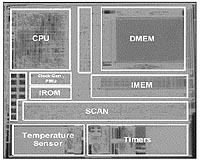
Ann Arbor, Mich. (UPI) Jun 17, 2008 U.S. scientists say they've created a microchip that uses 1/30,000th the power in sleep mode and 1/10th as much in active mode than regular chips. The Phoenix Processor -- developed at the University of Michigan and which set a low-power record -- is intended for use in cutting-edge sensor-based devices such as medical implants, environment monitors or surveillance equipment. The project leaders, doctoral students Scott Hanson and Mingoo Seok, said their chip consumes 30 picowatts during sleep mode. A picowatt is one-trillionth of a watt. The researchers said the energy stored in a watch battery would theoretically be enough to run the Phoenix for 263 years. Hanson will present the research Friday during the Institute of Electrical and Electronics Engineers' Symposium on VLSI Circuits. Community Email This Article Comment On This Article Share This Article With Planet Earth
Related Links Computer Chip Architecture, Technology and Manufacture Nano Technology News From SpaceMart.com
 Designing Microchips That Contain Multiple Selves
 Houston TX (SPX) Jun 13, 2008
Rice University computer engineers have created a way to design integrated circuits that can contain many multiple selves. The chips can assume one identify or a subset of identities at a time, depending on the user's needs. |
|
|

| The content herein, unless otherwise known to be public domain, are Copyright 1995-2007 - SpaceDaily.AFP and UPI Wire Stories are copyright Agence France-Presse and United Press International. ESA Portal Reports are copyright European Space Agency. All NASA sourced material is public domain. Additional copyrights may apply in whole or part to other bona fide parties. Advertising does not imply endorsement,agreement or approval of any opinions, statements or information provided by SpaceDaily on any Web page published or hosted by SpaceDaily. Privacy Statement |
 del.icio.us
 Digg
Digg Reddit
 YahooMyWeb
 Google
 Facebook