|
 |
 |
 |
 |
 |
 |
 |
 |

 |
Micro Satellite Launches Into Space
Space Vehicles Directorate Public Affairs USAF Wallops Island VA (AFNS) Jan 01, 2007 The Tactical satellite spacecraft has commenced operations on a planned six to 12-month experimental mission after a successful launch onboard a Minotaur I rocket from the National Aeronautics and Space Administration's Wallops Island Flight Facility, Dec. 16. The micro satellite, managed by the Air Force Research Laboratory's Space Vehicles Directorate here, entered into a circular orbit at a 40 degree inclination approximately 255 miles above the Earth. The tactical satellite, dubbed "TacSat-2," is considered to be another step toward developing low-cost, customized and rapidly deployable space capabilities for theater warfighters, who someday may place a number of these assets into orbit as they prepare for contingency operations. According to Neal Peck, TacSat-2 program manager, all of the spacecraft's components are functioning properly, and the system is performing like clockwork. "The project team is excited about the positive start to a milestone mission for the future of rapid, responsive space operations," said Peck. Featuring 11 instrument packages, the TacSat-2 mission will include experiments directly supporting the warfighter on the ground. Two trials -- the 20-inch telescope constructed by the Space Vehicles Directorate, and the Common Data Link tactical radio -- will impact on deployed forces. The 20-inch telescope will demonstrate low-cost, high-quality photography. The Common Data Link tactical radio will provide communication and image transmissions to a U.S. Navy facility at China Lake, Calif. Additional planned trials involve the integrated global positioning system occultation receiver, which will compute high-precision location information for the spacecraft, recycled solar array panels producing 500 watts of power, and autonomous operations. TacSat-2 represents a partnership between Air Force Research Laboratory, NASA, the Department of Defense's Space Test Program (Space and Missile Systems Center's Space Development and Test Wing), the Naval Research Laboratory, the Army Space Program Office, Air Force Space Command and the Space Warfare Center. In addition, the micro satellite was built by MicroSat Systems, Inc., with the command and data handling system, electrical power system, as well as the flight software supplied by Broad Reach Engineering. Jackson and Tull provided the innovative integration and testing of TacSat-2. Community Email This Article Comment On This Article Related Links Microsat and Nanosats at SpaceMart.com Military Space News at SpaceWar.com Microsat News and Nanosat News at SpaceMart.com
 Tacsat-2 Launched Into Space With Flawless Liftoff
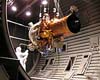 Wallops Island VA (AFNS) Dec 21, 2006
Successfully launched onboard a Minotaur I rocket, the TacSat-2 spacecraft has commenced operations on a planned six to 12-month experimental mission Dec. 16 from the NASA's Wallops Island Flight Facility near Wallops Island, Va. |
|
|

| The content herein, unless otherwise known to be public domain, are Copyright 1995-2006 - SpaceDaily.AFP and UPI Wire Stories are copyright Agence France-Presse and United Press International. ESA PortalReports are copyright European Space Agency. All NASA sourced material is public domain. Additionalcopyrights may apply in whole or part to other bona fide parties. Advertising does not imply endorsement,agreement or approval of any opinions, statements or information provided by SpaceDaily on any Web page published or hosted by SpaceDaily. Privacy Statement |