|
 |
 |
 |
 |
 |
 |
 |
 |

 |
Mice Stressed In Simulated Weightlessness Show Organ Atrophy
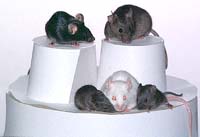
New Brunswick NJ (SPX) Sep 04, 2007 A ground-based, experimental model used to simulate astronaut weightlessness in space has provided Rutgers scientists an opportunity to study the effects of stress on immune organs. Earlier collaborative research with Japanese scientists employing this model implicated the protein osteopontin (OPN) in bone mineral loss associated with simulated weightlessness in mice. This research was made possible by the creation at Rutgers of a mouse unable to make OPN (a "knock-out" mouse). Studies with this Rutgers mouse have demonstrated that OPN likely plays a role in a variety of human problems including cancer metastasis, multiple sclerosis and other autoimmune diseases, osteoporosis and certain inflammatory responses. The new study, which also simulated weightlessness, demonstrated that OPN is required for the atrophy of immune organs brought on by the stress resulting from hindlimb unloading - a technique employed to simulate weightless conditions by lifting the animal's body weight off its hind legs. Results are presented Sept. 3 online in the Proceedings of the National Academy of Sciences (PNAS) and in the Sept. 11 print issue. "The bone loss seen in astronauts or bedridden patients is not a stress issue," explained David Denhardt, a professor in the Department of Cell Biology and Neuroscience at Rutgers, The State University of New Jersey. "They are experiencing a loss of weight bearing on the bones, and the loss of bone mineral is a direct result of this load reduction." The presence of OPN, a feature common to both the bone loss and the organ atrophy, is produced by two different causes - weightlessness and stress - coincidentally related to the same laboratory conditions. OPN is the continuing focus of Denhardt's research interests. His long-term goal is to develop an OPN antibody - a monoclonal or target-specific antibody - that will inhibit OPN function in lab mice, and ultimately, in humans. This antibody could prove useful in treating the many destructive diseases associated with OPN. Denhardt's graduate student Kathryn Wang, a co-author on the PNAS paper, had previously conducted experiments in which the mouse was positioned in such a way as to produce hind limb unloading. This simulated weightless condition produced OPN-dependent bone loss in the hind limbs and provided a potential testing ground for possible OPN antibodies. The specialized equipment for that experiment was supplied by another co-author on the paper, Yufang Shi, a professor in the Department of Molecular Genetics, Microbiology and Immunology at Robert Wood Johnson Medical School-University of Medicine and Dentistry of New Jersey. Shi, an authority on stress, suggested that along with the bone loss studies, the Rutgers researchers should look at the spleen and thymus - the organs responsible for most of the animal's immune cells. If stress affects the spleen and thymus so that they atrophy, the immune system becomes impaired. People under severe stress often get sick. The Rutgers scientists took their colleague's advice and compared the OPN-deficient knock-out mice to normal mice, with some dramatic results. "To our astonishment and surprise, the OPN-deficient animals responded differently to the stress than the normal controls," Denhardt said. "We had no basis to expect this, but the spleen and thymus of the OPN-deficient animals remained normal whereas there was atrophy of the spleen and thymus in the normal controls. This was a novel and totally unexpected result for which we have no explanation at this time. The next phase of our research will ask what exactly is going on." The stressed normal mice also displayed elevated levels of corticosterone - a hormone known to induce apoptosis (programmed cell death), a process evident in the spleen and thymus of these mice and a possible mechanism underlying the atrophy. Denhardt said that their results indicate that OPN needs to be present for these stress related symptoms to occur, pointing to a whole new physiological realm in which the culprit osteopontin is causing problems. CommunityEmail This Article Comment On This Article Related Links Rutgers, the State University of New Jersey Space Tourism, Space Transport and Space Exploration News
 NASA Study Will Help Stop Stowaways To Mars
 Pasadena CA (SPX) Aug 30, 2007
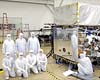
NASA clean rooms, where scientists and engineers assemble spacecraft, have joined hot springs, ice caves, and deep mines as unlikely places where scientists have discovered ultra-hardy organisms collectively known as 'extremophiles'. Some species of bacteria uncovered in a recent NASA study have never been detected anywhere else. |
|
|

| The content herein, unless otherwise known to be public domain, are Copyright 1995-2007 - SpaceDaily.AFP and UPI Wire Stories are copyright Agence France-Presse and United Press International. ESA Portal Reports are copyright European Space Agency. All NASA sourced material is public domain. Additional copyrights may apply in whole or part to other bona fide parties. Advertising does not imply endorsement,agreement or approval of any opinions, statements or information provided by SpaceDaily on any Web page published or hosted by SpaceDaily. Privacy Statement |