|
 |
 |
 |
 |
 |
 |
 |
 |

 |
Metop Measures Ozone And Nitrogen Dioxide Concentrations With High Precision
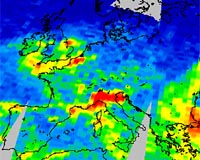
Paris, France (ESA) Mar 14, 2007 MetOp-A (Meteorological Operational Satellite), launched in October 2006, is improving weather forecasting in the three-day period. The satellite has an instrument than can measure ozone content as well as the concentration of trace chemicals, thereby determining air quality. This instrument, a spectrometer called GOME-2 (Global Ozone Monitoring Experiment), is being currently tested for full functionality during its first operational phase; it has already transmitted its first dataset, which is presently being evaluated. GOME-2 is managed on behalf of EUMETSAT within the so-called "Satellite Application Facility for Ozone and Atmospheric Chemical Monitoring" team (O3M SAF). Working together with the Institute for Space Exploration Methodology (IMF) and the German Space Exploration Data Center (DFD), O3M SAF processes data from the complete line of GOME-2 products for DLR. The Finnish Weather Service (FMI) coordinates the O3M SAF network. The MetOp-A mission gives Europeans the green light for a long-term initiative to oversee the restoration of Earth's ozone layer. It also should support the ability to monitor and forecast air quality not only in Europe but also worldwide. MetOp-A is the first in a series of high-precision satellites for weather and climate observation. It has a total of eleven instruments and circles the globe on a polar orbit at a distance of 817 kilometers above the surface. The ozone monitoring instrument GOME-2 replaces the successful GOME spectrometer, which was launched in April 1995 onboard the European Space Agency's ERS-2 satellite. GOME-2 makes it possible to obtain a daily global log of virtually the entire surface of Earth. The instrument measures the atmospheric ozone concentration and distribution of other trace chemicals related to the problem of ozone depletion in the stratosphere. Also it helps with the problem of finding the source for natural and man-made pollutants. The amount of ultraviolet radiation reaching Earth's surface can also be derived from these measurements. The disintegration of the ozone layer, especially pronounced over the arctic and antarctic regions, is of particular relevance to the environment: a consequence is that increased ultraviolet radiation reaches the surface of the planet. This has a damaging effect on human health, agricuture, and forestry, as well on the water cycle. High concentrations of airborne pollutants impair the respiratory tract and contribute to acid rain, which further damages soil and vegetation. Community Email This Article Comment On This Article Related Links DLR DFD - Ozone und UV EUMETSAT The Air We Breathe at TerraDaily.com The Air We Breathe at TerraDaily.com
 Thailand Considers Declaring Emergency Over Haze
 Bangkok (AFP) March 13, 2007
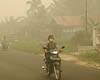
Thailand may declare an environmental emergency in tourist hotspot Chiang Mai and two other northern provinces after a thick smog blanketed the region, the environment minister said Tuesday. Kasem Snidwong Na Ayuttaya said air quality in three provinces was double the hazardous level after widespread forest fires and farmers setting blazes to clear land. |
|
|

| The content herein, unless otherwise known to be public domain, are Copyright 1995-2006 - SpaceDaily.AFP and UPI Wire Stories are copyright Agence France-Presse and United Press International. ESA PortalReports are copyright European Space Agency. All NASA sourced material is public domain. Additionalcopyrights may apply in whole or part to other bona fide parties. Advertising does not imply endorsement,agreement or approval of any opinions, statements or information provided by SpaceDaily on any Web page published or hosted by SpaceDaily. Privacy Statement |