|
 |
 |
 |
 |
 |
 |
 |
 |

 |
Meteor impacts can have subtle effects
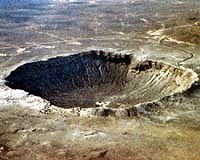
Lower Hutt, New Zealand (UPI) Jan 23, 2008 A New Zealand study suggests meteor impacts with the Earth can produce effects of a more subtle and insidious kind than just catastrophic extinction. Researchers at the Institute of Geological and Nuclear Sciences in Lower Hutt, New Zealand, said the shattering impact of meteors on rocks can produce increased groundwater-rock surface interaction, affecting the quality of groundwater that percolates through the fractured, melted rocks of the impact structure. The scientists said a good example was found at the Canadian town of Gypsumville, Manitoba, located near the Lake St. Martin meteor impact crater. Domestic wells in the town have elevated salinity, sulfate and fluoride concentrations. The fluoride, which exceeds health limits, is of concern as excess intake causes mottling of teeth at moderate levels, to softening of bones and neurological damage at higher levels. The groundwater with elevated fluoride is shown to occur exclusively within the impact structure, and the study is thought to be the first to document enhanced groundwater fluoride concentrations associated with impact structures. The research is detailed in the journal Geology. Community Email This Article Comment On This Article Related Links Asteroid and Comet Impact Danger To Earth - News and Science
 First Glimpses From The Perseid Meteor Shower
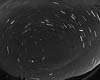 Parsis, France (SPX) Aug 16, 2007
Enthusiastic observers were rewarded by a nice display of the Perseid meteor shower that was visible at its best in the night between 12 and 13 August 2007. We present glimpses of the spectacle and the scientific rewards of staying up all night. The comet Swift-Tuttle orbits the Sun with a period of about 130 years. Whenever the comet comes close to the Sun in its orbit, it ejects a stream of dust particles, which are then distributed along its orbit. |
|
|

| The content herein, unless otherwise known to be public domain, are Copyright 1995-2007 - SpaceDaily.AFP and UPI Wire Stories are copyright Agence France-Presse and United Press International. ESA Portal Reports are copyright European Space Agency. All NASA sourced material is public domain. Additional copyrights may apply in whole or part to other bona fide parties. Advertising does not imply endorsement,agreement or approval of any opinions, statements or information provided by SpaceDaily on any Web page published or hosted by SpaceDaily. Privacy Statement |