|
 |
 |
 |
 |
 |
 |
 |
 |

 |
MetOp Launch Campaign Resumed
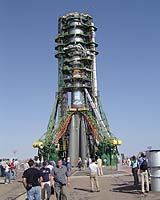
Paris, France (ESA) Sep 20, 2006 With the launch of MetOp now set for 7 October at 18:28 CEST, the MetOp satellite is out of storage and preparations for launch are well underway at the Baikonur Cosmodrome in Kazakhstan. MetOp's planned launch from Baikonur on a Soyuz/ST launcher, originally planned for 17 July, had to be called off after three consecutive attempts because of technical issues relating to the Soyuz's ground system. However, the problems have now been solved and a review of the overall ground system validation process is now underway. In addition, the Soyuz launcher has been completely refurbished and has been transported back to the launch site from the manufacturer's facilities in Samara, Russia. After the aborted launch attempts, the MetOp satellite had to be prepared to go into storage until the new launch date was set. Among other things, this meant that the solar array Kevlar deployment cables, which have to be tensioned before launch, had to be released. During the storage period the satellite and the Fregat had daily check-ups to ensure that they were maintained in a safe state. This included monitoring the temperature and pressure within the Fregat propulsion system and keeping a check on the nitrogen gas flushing system that was needed by some of the instruments under storage conditions. The launch campaign officially resumed on 29 August and the team are back in Baikonur to carry out the pre-launch procedures. This time there are even more safety constraints as the MetOp satellite remains fuelled from the previous launch attempts and checks for any leaks are continually being carried out. So far, the main activities have been concerned the de-mating and removal of the Fregat upper stage, and then with the start of the satellite preparation with unlocking and re-locking the solar array drive mechanism, and replacing the solar array Kevlar cables - all of which have been successfully completed. Checks have been completed on the umbilical cable for the launch vehicle adapter and Fregat upper-stage. The HIRS (High-resolution Infrared Radiation Sounder), the AVHRR (Advanced Very High Resolution Radiometer) and the GOME-2 (Global Ozone Monitoring Experiment-2) instruments have all been cleaned and inspected. The satellite is scheduled to be mated with the Fregat upper-stage on 22 September and encapsulated in the fairing on 28 September. The Upper Composite, which is the encapsulated satellite and Fregat upper-stage, will be integrated onto the Soyuz rocket on 30 September and rollout to the launch pad will take place on 4 October followed by launch on 7 October. Community Email This Article Comment On This Article Related Links MetOp at ESA Weather News at TerraDaily.com Making money out of watching earth from space today Weather News at TerraDaily.com
 Drought As The New Norm For The Weather
 Canberra, Australia (SPX) Sep 15, 2006
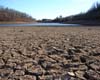
Droughts are slow, tortuous emergencies that seem to sneak up on us. It doesn't have to be that way, say a climatologist and a political scientist who point to a better way. It's perfectly possible to plan for droughts and minimize the losses they cause. In fact Australia has set in place policies that blaze a trail for the US follow to some extent, says Linda Botterill, a political scientist at the Australian National University in Canberra. |
|
|

| The content herein, unless otherwise known to be public domain, are Copyright 1995-2006 - SpaceDaily.AFP and UPI Wire Stories are copyright Agence France-Presse and United Press International. ESA PortalReports are copyright European Space Agency. All NASA sourced material is public domain. Additionalcopyrights may apply in whole or part to other bona fide parties. Advertising does not imply endorsement,agreement or approval of any opinions, statements or information provided by SpaceDaily on any Web page published or hosted by SpaceDaily. Privacy Statement |