|
 |
 |
 |
 |
 |
 |
 |
 |

 |
Mercury's Transient Message Marks Millennium's End
Auckland (AFP) November 14, 1999 - The millennium may have captured all the hype and headlines, but on Monday, Nov. 15, a cosmic event will occur that is bound to stir amateur historians and lovers of the sea. For an hour and one minute, (9:11 a.m. to 10:10 a.m. in New Zealand) a transit of Mercury -- a passage of the planet across the sun -- will take place across the Pacific. The transit of Mercury, an astronomical curiosity that occurs on average every 13 years, was directly responsible for driving Captain James Cook to go, as he put it, "further than any man before." This year, the U.S. Naval Observatory in Washington says Mercury will be visible across the entire Pacific Ocean, Australia, Papua New Guinea, New Zealand's North Island, western South America and most of North America as it passes across the sun. The observatory says Mercury will be visible only through a telescope. Its path will cut a small chord across the north-east part of the sun's disk. Astronomer Johannes Kepler predicted the first observed transit of Mercury which occurred on Nov. 7, 1631. The transits of Mercury and Venus were once important for working out the size of the sun. The even rarer Venus transit of 1769 was seen as key to cementing British colonial naval power. It was thought the transit could resolve that most vexing nautical problem -- working out longitude. The transit of Venus allowed the testing of more accurate chronometers. If an astronomical event was known to have occurred at a fixed point and known time on the earth's surface -- Greenwich as it was -- and the same event was observed elsewhere on the earth then the difference in hours, multiplied by 15 (one hour is equivalent to 15 degrees of longitude), will give longitude. With inaccurate clocks it was almost impossible to do. Edward Halley, of Halley's Comet fame, worked out the date of the next transit of Venus and determined that observations would be taken at Norway's North Cape, Hudson Bay in Canada and someplace on or close to the Tropic of Capricorn, halfway between Chile and Indonesia, then called the Dutch East Indies. Cook was given the bark Endeavour and a revolutionary new chronometer and despatched to Tahiti. At what is now Point Venus, Cook and astronomer Charles Green on June 3, 1769, observed the transit of Venus. "(We) very distinctly saw an Atmosphere or dusky shade round the body of the Planet which very much disturbed the times of the Contacts particularly the two internal ones ... the precise time that the penumbra left the sun could not be observed to any great degree of certainty, at least not by me," Cook noted. The failure at Point Venus turned out to be of minor consequence as Cook's secret orders then directed him to sail to 40 degrees south and then east, to attempt to find the mythical continent of Terra Australis. In that magical first voyage he mapped most of the South Pacific. Cook arrived in New Zealand, unvisited by Europeans since a brief call a century earlier by Dutchman Abel Tasman, and to test the accuracy of his maps, he turned to the transit of Mercury which occurred on November 9, 1769. He set up a scientific base at Coromandal, to observe the transit. When it occurred at 7.20 a.m. Cook got his figures wrong, although the coastal area bears the name Mercury Bay in honor of the event. Thursday, November 11, 1999, 4:37 PM EST
Astronomers Journey To Jordan For Meteor Storm They will first attend a two-day conference on the Leonid meteors, before heading for the eastern Azraq desert, where the storm is expected to be at its best in the early hours of November 18. If they are lucky, the storm could pack up to 1,500 meteors per hour although more recent estimations speak of only of 500 meteors per hour, society president Khalil Konsul told AFP. "Everything could change at the last minute," he said hopefully. The conference will be the first ever in the Middle East exclusively devoted to Leonid meteors, he said. Jordan, with its wide desert expanses and clear skies thanks to relatively low pollution levels, provides excellent sites for observing meteor activity. The Leonids -- so called because they appear in the sky in the region of the constellation of Leo -- are a stream of minute dust particles trailing behind the Tempel-Tuttle comet, which is visible from earth every 33 years. When the comet passes close to the sun, as it did last year, more of its ice core melts, releasing more dust. This is why the Leonids are expected to be particularly impressive this year, like a giant fireworks show. Three camps will be set up for the general public to observe them, but the Azraq camp will be open only for Society members and their guests including astronomers and scientists from Armenia, Australia, Belgium, Germany, Iran, Iraq, Ireland, the Netherlands, New Zealand, the Palestinian territories, Singapore, Syria, the United Arab Emirates and the United States. The next major Leonid meteor storm is not expected until 2098 or even 2131. Copyright 1999 AFP. All rights reserved. The material on this page is provided by AFP and may not be published, broadcast, rewritten or redistributed.
Email This Article Comment On This Article Related Links Space
 Satellite Launch To Boost DTH In India
 Calcutta, India (SPX) Dec 28, 2005
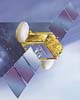
The successful launch Thursday of India's heaviest satellite from spaceport of Kourou in French Guyana may have boosted the country's space research efforts to yet another level, but it has also lifted the spirits of at least three Direct-To-Home televisions broadcasters, one of which has been waiting for years to launch its services in India. |
|
|

|
|
|
|
|
|
|
|
|
|
|
|
| The content herein, unless otherwise known to be public domain, are Copyright 1995-2006 - SpaceDaily.AFP and UPI Wire Stories are copyright Agence France-Presse and United Press International. ESA PortalReports are copyright European Space Agency. All NASA sourced material is public domain. Additionalcopyrights may apply in whole or part to other bona fide parties. Advertising does not imply endorsement,agreement or approval of any opinions, statements or information provided by SpaceDaily on any Web page published or hosted by SpaceDaily. Privacy Statement |