
 |
 |
 |
 |
 |
 |
 |
 |
 |

 |
Medical supply firm sues Canada's nuclear agency
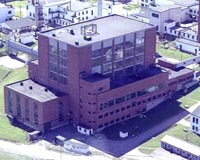
Ottawa (AFP) July 9, 2008 A Canadian company that supplies radioactive materials for medical tests worldwide on Wednesday sued the government and its nuclear agency for shelving two reactors crucial for its supply of isotopes. In a statement, MDS Inc. said the two canceled Maple reactors would have produced 40 years of medical isotopes for patients worldwide. By nixing the project, the company claims the Atomic Energy of Canada Limited (AECL) breached its contractual obligations, and it is now seeking 1.6 billion dollars in damages from the agency and the government of Canada. "We have had to resort to taking these steps to protect the interests of patients, the nuclear medicine community, our shareholders and our customers," said Stephen DeFalco, president and CEO of MDS. "We are disappointed that AECL and the government decided to abandon the Maple project without establishing a clear plan for the long-term supply of critical medical isotopes," he added. In a statement, AECL said it had met its obligations to MDS and planned to "vigorously defend" itself in court. A spokeswoman for Natural Resources Minister Gary Lunn echoed AECL and told AFP the project had been mismanaged by a previous administration, "leaving it crippled with technical and economic problems for years." In 1996, MDS had entered into an agreement with AECL for the design, development and construction of the two new nuclear reactors and a processing facility. The so-called Maple project was intended to replace AECL's aging National Research Universal (NRU) reactor, which produces about half of the world's medical isotopes, and was to be completed by the year 2000 at a planned cost to MDS of 145 million dollars. But by 2005, the project was not yet completed and costs had more than doubled, with MDS's investment exceeding 350 million dollars. In May, the government pulled the plug on the project, citing soaring costs and delays. To meet the demand for medical isotopes, AECL said it would keep its 50-year-old NRU reactor operational, however its license is up in October 2011. A temporary maintenance shutdown of the aging NRU reactor last year sparked a worldwide shortage of medical isotopes, and led to the firing of Canada's nuclear safety chief. According to reports, thousands of medical tests were postponed in Canada, the United States and other countries because of the isotopes shortage. Medical isotopes are radioactive materials which are injected into patients to allow molecular imaging equipment to produce detailed scans for diagnosing cancer and other diseases. MDS has an exclusive contract to supply AECL medical isotopes to hospitals and clinics around the world for molecular imaging, radiotherapeutics, and analytical instruments. Community Email This Article Comment On This Article Share This Article With Planet Earth
Related Links Hospital and Medical News at InternDaily.com
 Microchip to aid lung cancer treatments
 Boston (UPI) Jul 8, 2008
 U.S. medical scientists say they've found circulating tumor cells reveal genetic signatures of dangerous lung cancers, possibly leading to targeted therapy. |
|
|

| The content herein, unless otherwise known to be public domain, are Copyright 1995-2007 - SpaceDaily.AFP and UPI Wire Stories are copyright Agence France-Presse and United Press International. ESA Portal Reports are copyright European Space Agency. All NASA sourced material is public domain. Additional copyrights may apply in whole or part to other bona fide parties. Advertising does not imply endorsement,agreement or approval of any opinions, statements or information provided by SpaceDaily on any Web page published or hosted by SpaceDaily. Privacy Statement |
 del.icio.us
 Digg
Digg Reddit
 YahooMyWeb
 Google
 Facebook