|
 |
 |
 |
 |
 |
 |
 |
 |

 |
Mars Rovers Continue To Explore And Amaze One Year Later
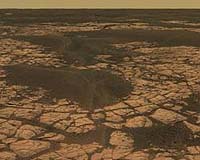
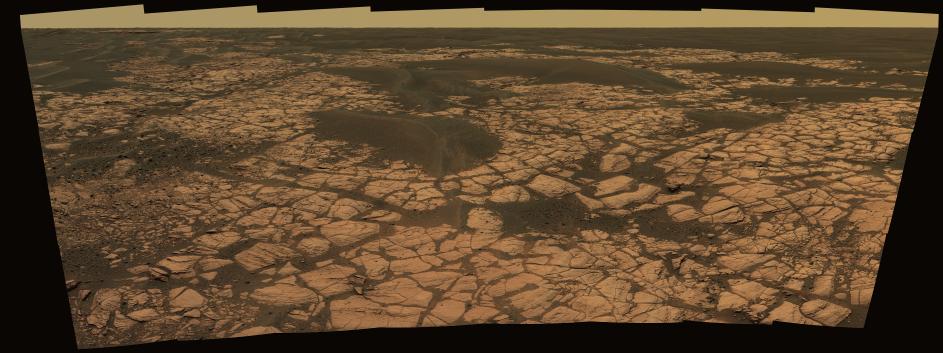
Pasadena CA (SPX) Dec 06, 2005 NASA's durable twin Mars rovers have successfully explored the surface of the mysterious red planet for a full Martian year (687 Earth days). Opportunity starts its second Martian year Dec. 11; Spirit started a new year three weeks ago. The rovers' original mission was scheduled for only three months. "The rovers went through all of the Martian seasons and are back to late summer," said Dr. John Callas of NASA's Jet Propulsion Laboratory. He is deputy rover project manager. "We're preparing for the challenge of surviving another Martian winter." Both rovers keep finding new variations of bedrock in areas they are exploring on opposite sides of Mars. The geological information they have collected increased evidence about ancient Martian environments including periods of wet, possibly habitable conditions. Spirit is descending from the top of "Husband Hill" to examine a platform-like structure seen from the summit. It will then hurry south to another hill in time to position itself for maximum solar-cell output during the winter. "Our speed of travel is driven as much by survival as by discovery, though the geology of Husband Hill continues to fascinate, surprise, puzzle and delight us," said Dr. Steve Squyres of Cornell University, principal investigator for the rover's science instruments. "We've got this dramatic topography covered with sand and loose boulders, then, every so often, a little window into the bedrock underneath." From the composition and texture of more than six different types of rock inspected, scientists deduced what this part of Mars was like long ago. "It was a hot, violent place with volcanic explosions and impacts," Squyres said. "Water was around, perhaps localized hot springs in some cases and trace amounts of water in other cases. Aided by a good power supply from Spirit's solar cells, researchers have been using the rover at night for astronomical observations. One experiment watched the sky during a meteor shower as Mars passed through the debris trail left by a passage of Halley's comet. "We're taking advantage of a unique opportunity to do some bonus science we never anticipated we would be able to do," Said Cornell's Dr. Jim Bell, lead scientist for the rovers' panoramic cameras. Opportunity is examining bedrock exposures along a route between Endurance and Victoria craters. It recently reached what appears to be a younger layer of bedrock than examined inside Endurance. In Endurance, the lowest layers of bedrock were deposited as windblown dunes. Some of the upper layers were deposited as underwater sediments, indicating a change from drier to wetter conditions over time. The bedrock Opportunity began seeing about two-thirds of the way to Victoria appears to lie higher than the upper layers at Endurance, but its texture is more like the lowest layer, petrified sand dunes. This suggests the change from drier to wetter environmental conditions may have been cyclical. Iron-rich granules are abundant in all the layers at Endurance but are much smaller in the younger bedrock. These granules were formed by effects of water soaking the rocks. One possibility for why they are smaller is these layers spent less time wet. Another is the material in these layers had a different chemistry to begin with. Rover researchers are presenting their latest data today during the American Geophysical Union meeting in San Francisco. Images and information about the rovers and their discoveries are available on the Web at: Community Email This Article Comment On This Article Related Links Mars Rovers at JPL Mars Rovers at Cornell SpaceDaily Search SpaceDaily Subscribe To SpaceDaily Express Mars News and Information at MarsDaily.com Lunar Dreams and more
 Spirit Heading To 'Home Plate'
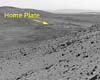 Pasadena CA (JPL) Jan 09, 2006
Last week Spirit completed robotic-arm work on "El Dorado." The rover used all three of its spectrometers plus the microscopic imager for readings over the New Year's weekend. |
|
|

| The content herein, unless otherwise known to be public domain, are Copyright 1995-2006 - SpaceDaily.AFP and UPI Wire Stories are copyright Agence France-Presse and United Press International. ESA PortalReports are copyright European Space Agency. All NASA sourced material is public domain. Additionalcopyrights may apply in whole or part to other bona fide parties. Advertising does not imply endorsement,agreement or approval of any opinions, statements or information provided by SpaceDaily on any Web page published or hosted by SpaceDaily. Privacy Statement |