|
 |
 |
 |
 |
 |
 |
 |
 |

 |
Malaysia Launches World's Smallest Microchip With Radio Chip
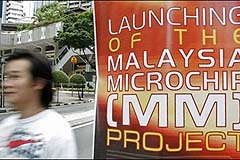
Kuala Lumpur, Feb 25 (AFP) Feb 25, 2007 Malaysia over the weekend launched what it said is the world's smallest microchip with radio technology in a quest to position itself as a leading high-tech chip producer for a global market. The Malaysia Microchip was released after more than two years of research and development. The smallest version measures 0.7 millimetres by 0.7 millimetres, according to officials. Costing six cents each, three versions of the chip were developed after the Malaysian government in 2003 bought the technology and the rights to design, manufacture and market the chip from Japan's FEC Inc. At the launch on Saturday, Prime Minister Abdullah Ahmad Badawi lauded the chip for boosting Malaysian technological expertise. "It is only through being creators of technology, and not mere users of technology, that Malaysia can move up the economic value chain and take its place among the developed countries of the world," he said in a speech Saturday. The project was announced by former premier Mahathir Mohamad just before he retired in 2003 as part of his efforts to push Malaysia into hi-tech industries and make the country an industrialised nation by 2020. The tiny microchip holds technology which emits radio waves on multiple frequencies, which means it can be detected when embedded in paper documents such as money, or in objects or animals. Its first commercial application in Malaysia is for tagging and identifying original versions of movies on VCDs and DVDs as part of anti-counterfeiting efforts in the country where video piracy is rampant. The chief executive of the government agency set up to develop and market the Malaysia Microchip, Ahmed Tasir Lope Pihie, told AFP Sunday that "inquiries are coming in" from other countries about the chip. He also said Malaysia's and Hong Kong's international airports would in April or May start a pilot project using the chip to tag luggage travelling between the two airports. The chip would cut travel delays by making it easy to locate luggage that was lost or had to be removed from airplanes if passengers failed to show, or for security purposes, he said. "It will improve tremendously the traceability elements and authentication elements," Ahmed Tasir said. Home Minister Radzi Sheikh Ahmad said the microchip was developed for some 50 to 60 million dollars, and Malaysia would use the chip to curb forgeries of documents such as passports and birth certificates. "You think about the application, it is mind-boggling because there is no limit to it," Radzi told reporters at the launch. The chip is currently being produced in Japan but the minister said there were plans to move manufacturing to Malaysia. "We will go out internationally to market it anywhere in the world," he said.
Source: Agence France-Presse Community Email This Article Comment On This Article Related Links GPS Applications, Technology and Suppliers GPS Applications, Technology and Suppliers
 The Murky Ethics Of Implanted RFID Chips
 Washington DC (SPX) Feb 27, 2007
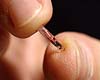
What if your boss asked you to have a chip implanted in your arm? Would you do it? What if it meant getting a higher salary? Radio frequency identification (RFID) tags, small circuits consisting of a microchip and an antenna that generate a radio signal when triggered by a reading device, are implanted in millions of pets and livestock to keep track of them and return them to their owners if they are lost. |
|
|

| The content herein, unless otherwise known to be public domain, are Copyright 1995-2006 - SpaceDaily.AFP and UPI Wire Stories are copyright Agence France-Presse and United Press International. ESA PortalReports are copyright European Space Agency. All NASA sourced material is public domain. Additionalcopyrights may apply in whole or part to other bona fide parties. Advertising does not imply endorsement,agreement or approval of any opinions, statements or information provided by SpaceDaily on any Web page published or hosted by SpaceDaily. Privacy Statement |