|
 |
 |
 |
 |
 |
 |
 |
 |

 |
Making A Friendlier Mosquito
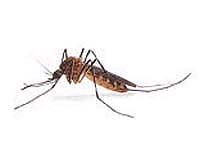
Davis CA - Apr 21, 2004 Genetically modified mosquitoes that cannot transmit malaria are one hope for battling the disease that still kills over one million people a year. But that plan faces some serious snags, according to UC Davis researchers who are suggesting an alternative strategy. Other scientists have proposed controlling malaria by releasing into the wild mosquitoes genetically engineered to resist malaria. If the resistant mosquitoes breed and spread their genes through the population, malaria transmission should be shut down. The malaria parasite depends entirely on female Anopheles mosquitoes to spread from person to person. That plan faces two problems, say postdoctoral researcher Matthew Hahn and Sergey Nuzhdin, a professor of evolution and ecology at UC Davis. First, the malaria resistance genes available are not very effective. Second, there's no way to reliably push the genes through the population. To put genes into an insect, scientists use a mobile piece of DNA called a transposon. Transposons are essentially DNA parasites that snip themselves in or out of the genome under the right circumstances. Scientists can add a new gene into a transposon and use it to carry that DNA into the insect genome. But it's in the interest of that transposon to just get rid of the extra DNA, Hahn said. Hahn and Nuzhdin propose an alternative strategy. They suggest designing a transposon that gives an advantage to mosquitoes that already carry genes to block malaria, so that those genes spread through the population by natural selection. The genetic engineering work involved is challenging but should be possible, Hahn said. Community Email This Article Comment On This Article Related Links UC Davis SpaceDaily Search SpaceDaily Subscribe To SpaceDaily Express Dirt, rocks and all the stuff we stand on firmly
 Magnetic Reconnection Region Larger Than 2.5 Million Km Found In The Solar Wind
 Paris (ESA) Jan 12, 2006
Using the ESA Cluster spacecraft and the NASA Wind and ACE satellites, a team of American and European scientists have discovered the largest jets of particles created between the Earth and the Sun by magnetic reconnection. This result makes the cover of this week's issue of Nature. |
|
|

| The content herein, unless otherwise known to be public domain, are Copyright 1995-2006 - SpaceDaily.AFP and UPI Wire Stories are copyright Agence France-Presse and United Press International. ESA PortalReports are copyright European Space Agency. All NASA sourced material is public domain. Additionalcopyrights may apply in whole or part to other bona fide parties. Advertising does not imply endorsement,agreement or approval of any opinions, statements or information provided by SpaceDaily on any Web page published or hosted by SpaceDaily. Privacy Statement |