|
 |
 |
 |
 |
 |
 |
 |
 |

 |
MIT Web Site Gathers And Displays Information On Government
Boston - Jul 06, 2003 In an attempt to provide American citizens with digital tools for participating in the democratic process, researchers at the MIT Media Lab will unveil the Government Information Awareness web site on July 4. The site, which utilizes new software and a database developed at the Media Lab, collects information from the general public, as well as from numerous online sources, to provide powerful online resource about our government. "Democracy requires an informed public," said graduate student Ryan McKinley, the designer of the Government Information Awareness (GIA) site who developed this system under the direction of Fukutake Assistant Professor Christopher Csikszentmih�lyi (pronounced cheek-sent-me-high-ee) in the Media Lab's Computing Culture group. "In the United States there is a widening gap between the government's ability to monitor its citizens, and citizens' ability to monitor their government. While the government is dramatically increasing its surveillance of Americans, the average citizen has little information about who in government is making key decisions, and who influences these decisions," McKinley said. To help address this gap, GIA relies on the collective intelligence of the American people to submit information, judge credibility and make connections using its web-based interface. The database resembles online auction systems in that it can handle massive amounts of information while allowing users to find exactly what they're looking for. Anyone can anonymously contribute information, but to ensure accuracy of submitted data, the system contacts the members of the government cited, giving them the opportunity for confirmation or denial. "History shows that when information is concentrated in the hands of an elite, democracy suffers," said Csikszentmih�lyi. "The writers of the constitution told us that if people mean to be their own governors, they must arm themselves with information. This project brings that American spirit of self-governance into the era of networked information technology." GIA is inspired by the federal government's Terrorist Information Awareness program (TIA), an effort to monitor Americans' lives in detail, from credit card purchases to pets' veterinary records. But unlike TIA, GIA is maintained by a diverse population of citizens rather than by the government. It allows people to explore data, track events, find patterns and build profiles related to specific government officials or political issues. Information about campaign finances, corporate ties and even religion and schooling can be easily accessed. Real-time alerts can be generated when a politician of interest is speaking on television. "We've had to solve the problem of how to build a useful, egalitarian, and massively scaleable database of sensitive information collected from diverse and unknown sources," said McKinley. "Our approach is to provide tools and context for individual citizens to decide what is and is not valid." He said the apolitical system increases the ability of the public to know who their government officials are and what they are doing. "Computers alone cannot monitor the government," said McKinley. "While we can aggregate data that already exists, a lot of valuable information is not stored in existing databases, but rather in the collective knowledge of the American citizenry. GIA introduces a way to consolidate and share this knowledge.� "If we are to maintain a democracy, it's crucial to ensure accountability," said Csikszentmih�lyi. "At least as much effort should be spent developing technologies that allow citizens to track their government as for government to monitor civilians." Currently the database contains information on more than 3,000 government figures. Comments or questions about GIA may be e-mailed to [email protected]. Community Email This Article Comment On This Article Related Links Government Information Awareness SpaceDaily Search SpaceDaily Subscribe To SpaceDaily Express Cyberwar - Internet Security News - Systems and Policy Issues
 Analysis: China's Futile Web Clampdown
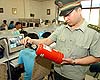 Beijing (UPI) Sep 27, 2005
An axiom of Communist China's founder Mao Zedong goes, "a single spark can start a prairie fire." Today, the country's leaders fear this is only an Internet click away. |
|
|

| The content herein, unless otherwise known to be public domain, are Copyright 1995-2006 - SpaceDaily.AFP and UPI Wire Stories are copyright Agence France-Presse and United Press International. ESA PortalReports are copyright European Space Agency. All NASA sourced material is public domain. Additionalcopyrights may apply in whole or part to other bona fide parties. Advertising does not imply endorsement,agreement or approval of any opinions, statements or information provided by SpaceDaily on any Web page published or hosted by SpaceDaily. Privacy Statement |